"I firmly believe that the success of the most popular games today is rooted in their simplicity"
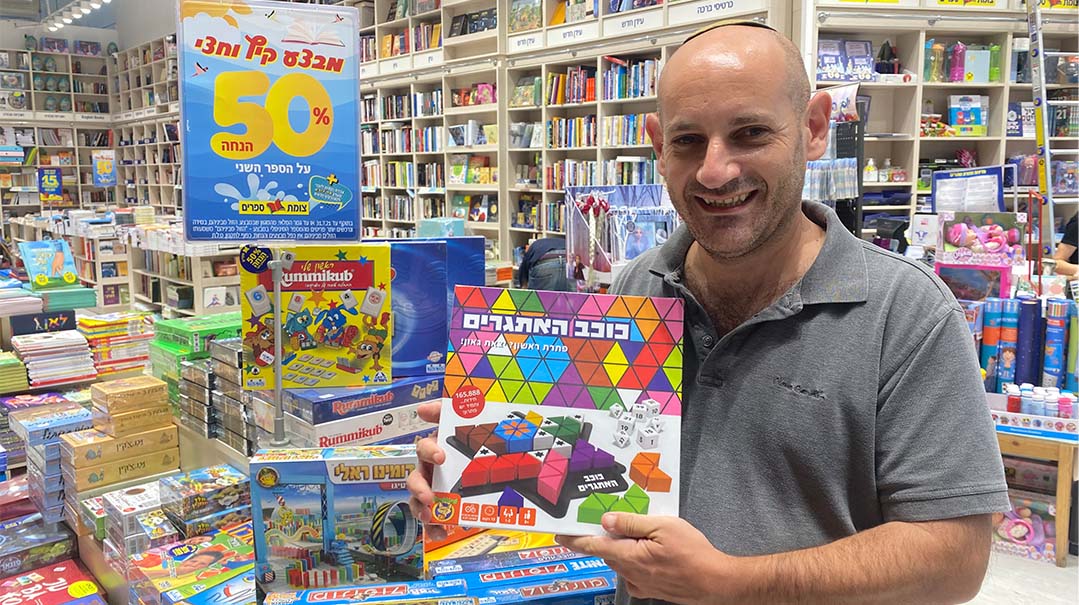
A strong element of variety should be built into the mechanics of the game, so it never gets predictable or boring. It must also involve all players as much as possible, because no one enjoys waiting around for their turn!
There’s no rule. In fact, there are communities of serious gamers out there who derive great joy from the depth and complexity of a game’s detail. However, I firmly believe that the success of the most popular games today is rooted in their simplicity. People don’t have the mental energy to read long, complicated rulebooks, let alone remember their contents. Instructions need to be concise and simple, understood on first reading. This doesn’t mean the game itself won’t be fun and challenging. I think this is one of the greatest successes of The Genius Star, which contains thousands of unique puzzle options, yet takes seconds to understand how to play. Many of its puzzles are easy to solve, but some of the challenges the game throws at you can be extremely taxing. I’ve even had people write to say a puzzle was impossible! I’ve always been able to prove at least one correct solution.
No. For ten years, I’ve been working as the director of international sales at The Happy Puzzle Company, a UK-based company that sells educational puzzles and games worldwide. It’s given me a deep understanding of what people are looking for in a game, as well as how that varies from country to country. I also run a private ADHD coaching practice, helping individuals and families understand and overcome the challenges of living with ADHD. My master’s degree is in social work and I have certification from the International Coach Federation. I’ve seen that a big part of supporting people with ADHD is understanding that people’s brains work differently—we enjoy learning in different ways. I design games for all, but my focus is developing games that create learning opportunities through hands-on play to serve the needs of children for whom traditional classroom-based education frameworks are not the best match. Until now, inventing games has only been a hobby, but I plan to shift my focus from sales to game creation in the coming months.
The Genius Star and Bee Genius were both inspired by The Genius Square, a wonderful game licensed to us at The Happy Puzzle Company by an Algerian inventor. It was a massive hit, and I thought of a follow-up game that could be just as popular but would push things to even greater levels of fun, challenge, and playability — that’s The Genius Star. I then created Bee Genius, a version that teaches foundational logic to children as young as three. I’m also involved in developing several other game ideas, and inspiration can come from literally anywhere, often when you least expect it. Someone challenged me to create a game that children, parents, and grandparents can play together and enjoy equally. Another idea I’m developing at the moment was triggered by a random visit to a sushi restaurant. And recently, someone approached me to help develop a game inspired by their favorite pasuk in the Torah.
Create a free account to keep reading.