Chaim Loeb is a certified personal trainer and a certified nutrition coach who is the founder and lead coach of Fit Yid Academy, an online health and fitness coaching program
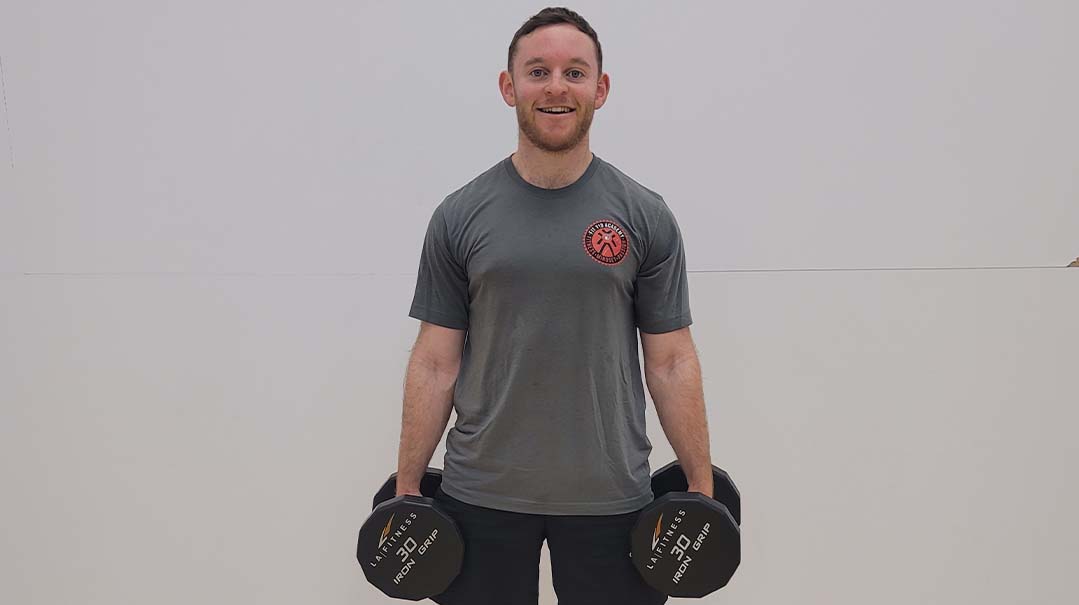
Someone who is open to it — meaning, he communicates and has a growth mindset. Yes, if you follow the plan and show up, you can succeed, but communication when things aren’t going well allows you to break through your roadblocks. Someone who can’t give up on an all-or-nothing mentality or who insists on doing his own thing will have it harder. Sometimes a member decides to do more exercise than I recommend or eat less because “that’s what worked last time.” He’s forgetting that all the weight he lost “last time” is back on — clearly it didn’t work in the long run!
A healthy lifestyle is long term, and that’s what I do — guide Jewish men to properly engage with their health and fitness by providing individualized coaching for a sustainable healthy lifestyle so they can live more intentional and energetic lives. I’m emphasizing sustainable because a good chunk of my methodology has to do with mindset, sometimes more than physical results — how members feel is more important than if they work out daily or if they lose weight. I tell them perfection isn’t the goal — consistency is. Of course, that doesn’t mean I don’t hold you accountable for your goals, but your state of mind about health can be more important than your physical results that month, for example.
I tried getting a personal-training certificate years ago, not to earn a parnassah but to focus myself. Yet I couldn’t do it — I really struggled with the studying. After that I wasn’t in a great place health-wise, until I finally decided to commit to a healthy lifestyle and mindset, to get my personal life back on track — managing my time, setting a sleep schedule, eating well, treating my body with respect. I was productive, I had energy and clarity, and I understood where I was holding spiritually. I wanted to help other Jewish men experience the benefits of good health habits and all that comes along with that. At that point, I was able to sit and study and pass the personal trainer certification exam.
I set up Fit Yid Academy over two years ago. At first I figured the way to go was workout DVDs — I’d done enough of them! — but I quickly realized they’re too one-dimensional, they focus on just working out, not the whole picture. How could that lead to real transformation? A nice house with no foundation won’t stand for long, and the same holds true here — habits like hydration, food prep, and better sleep for recovery will set a stronger foundation than just focusing on what you eat or your exercise routine. This one-stop shop is a fairly new model. For decades, health coaching has been about going to multiple professionals — a personal trainer, a nutritionist or dietitian, and recently, weight-loss coaches, who can help with a fad diet or one that has you buying their food line, and yes, you’ll lose weight quickly, but these diets are restrictive and not really sustainable.
Have a vision that extends past the three or six or 24 months it may take to reach your fitness goal. Too many people choose the quick “I want to lose 20 pounds,” and unfortunately don’t achieve a full identity transformation — “I want to live a lifestyle that includes more movement, better nutrition, and rest,” which is what creates lasting change. It’s less about the 20 pounds and more about the who — your identity.
I love the gym and the outdoors. I go to the gym five times a week and hike once a week. My six-day routine is four days strength training and two cardio sessions. I plan to train soon for an intense obstacle course race, so my routine will change, but for now, I wake up every day at five thirty. I like to rehydrate because I haven’t had a drink in the last seven-plus hours, and then I do a gym workout for 45 minutes before getting to work.
Aside from my car-cleaning business Pesach time, I do this full-time. My workday starts at eight thirty. I check in with my members —I have between 10 and 20 active from around the US, Israel, Canada, the UK — and I use this special software for their fitness routines. The rest of the day I’m busy with the business — posting content like thoughts on health, tips, exercise videos, members’ experiences, and the like; coaching calls with members; calls with potential members, and with my own coaches — a group of coaches who specialize in online coaching in my industry — on topics pertaining to my business. I also make sure time is blocked off for lunch and small breaks, sometimes I’ll take a stroll — that downtime is important.
Tricky, because it depends where you are — for one person it can be walking 15 minutes a day, for another it can be keeping to a bedtime. The first habit I work on with members is an easy one — drinking two cups of water in the morning. Next is eating more whole foods daily, then more exercise, and it progresses from there.
I love the simple but powerful comments, the positive impact we have in members’ homes: “I have more stamina when doing whatever family activity I’m into,” like the man from Florida who told me he realized how much he’s gained — not fat but energy, ha ha — after an Erev Shabbos dance party with his kids. Family is everything in our community, and often, the more physically fit a father is, the more mentally fit a father he can be.
You know, I focus more on mindset shifts than body transformations. A member once said, “I now want my actions to align with the person I want to become” — that’s a real breakthrough, because he’s building his identity around this health and fitness journey. But that isn’t flashy or fun, so I’ll share some stories, because yes, bodies change when fitness behaviors change. One member gained ten pounds and became more muscular — that was his goal — and another lost about ten pounds his first month. Another lost 25 pounds, he felt a huge increase in stamina. The real success is the members who, when faced with the choice of what we call supportive or unsupported foods for their goals, choose the supportive foods, because that shows a development in that skill of decision-making versus reacting, and that — say it with me — produces lasting results.
(Originally featured in Mishpacha, Issue 892)