Rabbi Aryeh Silber is the author of Hachi Garsinan (Israel Bookshop), a guide to Aramaic words in the Talmud
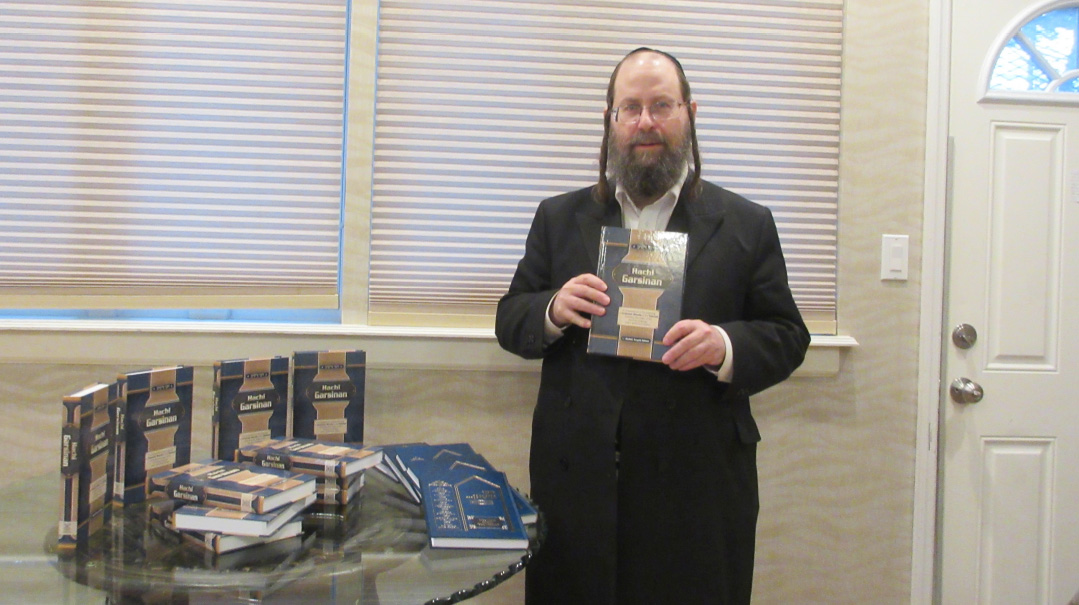
I was a rebbi for 11- and 12-year-old boys in a chassidish yeshivah, third year of learning Gemara, and then I started tutoring. I realized a lot of boys have problems figuring out the words of Gemara — this is usually the third language they’re exposed to, after Yiddish or English and Hebrew — and they get confused between “mani” and “nami,” and “hacha” and “heicha” and so on and so forth. I decided to make a list of the basic few hundred words with the teitsh on the side, and I’d give it out to all the yeshivos. That list is now a hardcover book in its fourth printing.
Usually when you learn something new, you go through the material slowly and increase your knowledge over time. Gemara is different; I can give you ten courses on Gemara, but when it comes to learning it, you’re lost. You don’t know when it’s a kasha, you don’t know when it’s a teretz, you don’t know when it’s a raaya, you don’t know when it’s a statement. “Amar lei” — you have to keep cheshbon of who says to whom. What other book is written in argument form, and you’re supposed to derive halachos from it? That’s what Gemara is all about, shakla v’tarya — back and forth. And there are no pintelech for punctuation, no nekudos for pronunciation. Chumash and Mishnayos have nekudos, but Gemara is a foreign language, and there’s no pintelech.
The first year is easy, because boys learn Gemara like Mishnayos — every word, every sentence. They don’t really have to understand the whole shakla v’tarya. Kids fall out of Gemara not the first year — it’s the second or the third when they aren’t koneh it and they’re at a loss.
My plan was a small booklet, but Hashem had other plans. Once I started writing, I’d find, Hey, this word has a shayachus to this Lashon Kodesh word, and I saw how similar Aramaic is to Lashon Kodesh. You have words where the shoresh is more or less the same: “meheiman —he is believed”is like “neeman — faithful.” You have combination words: “apuma” is “al pi —at the opening” or “agav” is “al gav — on top.” And you have words where the letters change. Sometimes it’s the ayin that changes to an alef, like “aha” — “ha” means this, “aha” is “al zeh —on this,” the alef here is in place of the ayin, and in this case, in place of the word “al.” I decided to make a list of these osiyos hamis’chalfos, these words with switched letters. My brother showed me I’m not the first one with this idea, Rav Avraham ben HaGra made a chart of osiyos hamischalfos, so I expanded on it.
Create a free account to keep reading.