"You have no idea how many once-stellar names in American Jewish leadership have left no, or virtually no, trace"
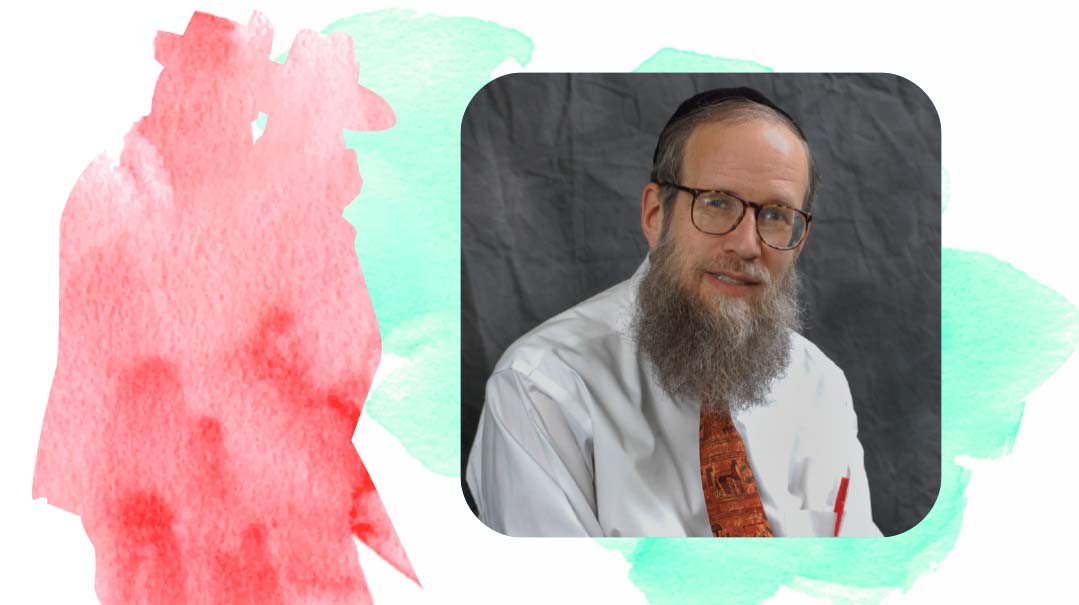
My father worked at the IJN, which services the breadth of the Jewish community, politically, religiously, and culturally, since 1943. He passed away in 1972 and left the newspaper to my mother. I was learning in yeshivah in Israel, and from there, I joined the IJN on a regular basis, writing a weekly column called “The View from Jerusalem.” I had experience with newspaper writing and publishing from high school and college. In 1983, after teaching in yeshivos and The Hebrew University, I moved back to Denver and worked alongside my mom as a writer. Our talented managing editor, Doris Sky, passed away suddenly in 1990, and I took on some editorial responsibilities. I had learned a lot of the editorial side from my dad, and over the next decade, I was gradually trained by my mother in the business side. I started taking on more publisher’s responsibilities like advertising and management. Today I do that as well as editorial responsibility.
Figuring out how to maintain a regular program of Torah study and research while taking on an absorbing newspaper job. At the newspaper itself, the big challenge was to accustom the community to a more forceful editorial page that advocated for greater Jewish communal expenditures on day school education, to ensure Jewish continuity. The basic premise of my argument was that the UJA was sending funds to cover a large portion of Israel’s budget, and we argued that for American Jewry’s self-preservation the funds should be redirected to day schools. To my regret, the position was not received, and as I ironically and bitterly put it now, I won all the arguments — because there is virtually no one left to argue with. In most cases, the children of that older generation intermarried, didn’t marry, didn’t have children, or fell away due to ignorance of Torah — they’ve disappeared. You have no idea how many once-stellar names in American Jewish leadership have left no, or virtually no, trace.
To publish additional special sections besides the weekly newspaper. I thought that the Jewish community, which had transformed from an immigrant community trying to survive to a very different community dominated by people with a higher education, needed more sophisticated and serious material. The first addition I implemented was a literary supplement in 1983 — and of course, the big question was whether it would be financially viable. I took charge of soliciting advertising for the new section, and it worked out.
How deeply challenged American Jewry was for its very existence, and how this would affect my business. Over the decades, I’ve seen many local Jewish organizations shrink or fold, and countless families unable to produce a next generation of concerned Jews — a disastrous effect of intermarriage and assimilation. Back in the ‘80s, you couldn’t live with the illusion that everyone was frum, especially if, like me, you weren’t in a large community on the East Coast, but many of the not-frum had great concern for the Jewish community and for Israel. Today, unfortunately, there are so few Jews in the wider Jewish world who are passionate and committed. And because the passion hasn’t been transferred to this generation, sustaining a Jewish community — and a Jewish newspaper — is extremely challenging. I didn’t foresee that. The challenge now is to sustain the good name of Israel and to highlight the spiritual and familial benefits of halachic observance, that is, of “generation to generation.”
Create a free account to keep reading.