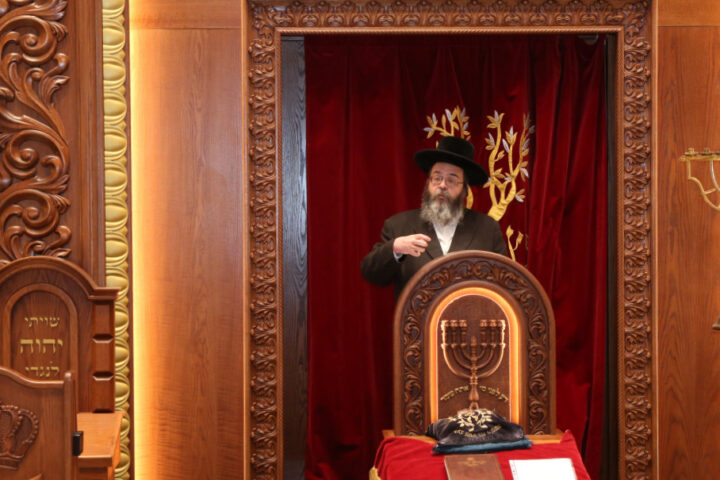
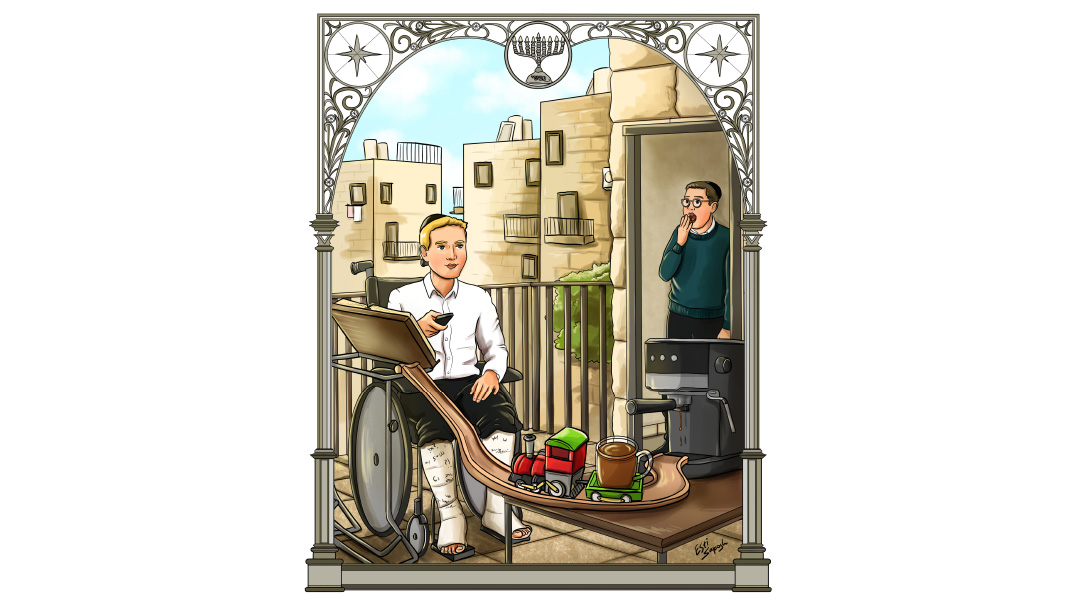
Those sounds of Torah continue to emanate from the very same building, a full century after its dedication
The streets of the Lower East Side at the dawn of the 20th century were teeming with Jewish immigrants, as the Great Immigration showed no signs of slowing down. In the decade leading up to World War I, well over a million Jews came to the United States. With the lion’s share settling in New York, the city’s Jewish population swelled to 1.5 million, nearly 30% of the city total. The predominantly Jewish neighborhood of Manhattan’s Lower East Side became one of the most densely populated areas worldwide.
Katz’s Delicatessen on Ludlow, the Forward Building at 173 East Broadway, the Yiddish theaters on Second Avenue, pushcart vendors on Orchard Street, the Beth Hamedrash Hagodol on Norfolk, the Bialystoker Synagogue off of Grand, Guss’s Pickles at 87 Orchard, are among the iconic Lower East Side addresses that come to mind. Yet it’s another address that bespeaks of both the richness of its storied history and the heroic vision of the founders of the institution it hosts. That is 145-147 East Broadway, home to Yeshivah and Mesivta Tifereth Jerusalem.
It seemed to be a foregone conclusion that Jewish schools couldn’t be successfully established within this ultra-urbanized environment of immigrants struggling to acclimate themselves to their new home. But there was an early attempt with RJJ, soon followed by a few others.
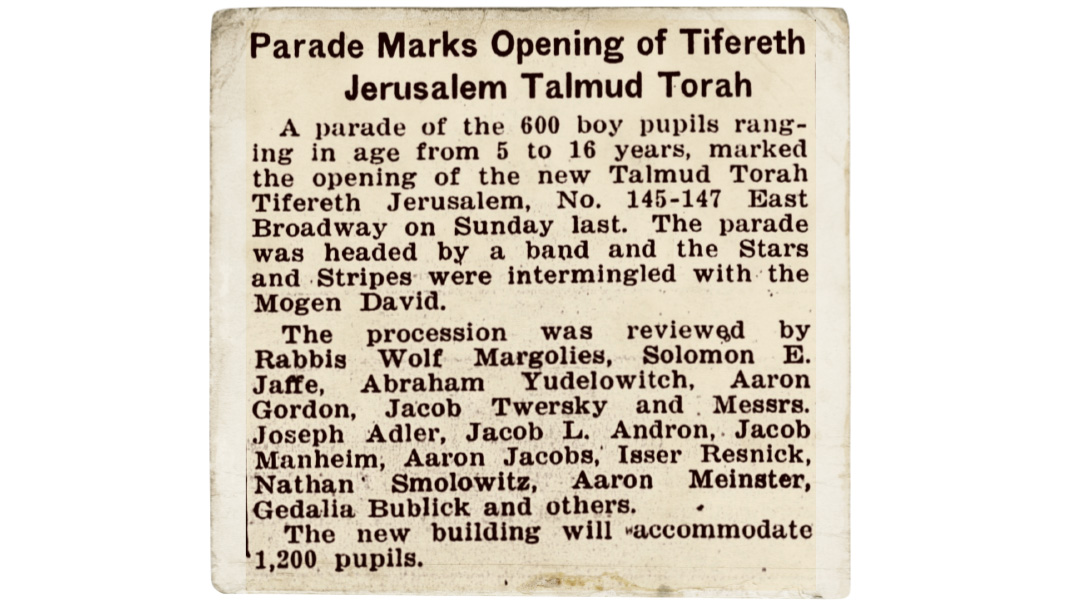
One of the pioneers in Jewish education was Congregation Tifereth Jerusalem on Eldridge Street, which opened a Talmud Torah of the same name in 1907 in the heart of the East Side. A group of courageous and visionary — and ordinary — laymen banded together in creating an educational institution that was unique. Even in an era when the Lower East Side offered the option of public schools that were nearly 100% Jewish and (perhaps for the only time in history) featured exclusively kosher kitchens, assimilation rates were sky-high, and the board saw a need to do more to stem the tide.
Create a free account to keep reading.