Several weeks ago Rabbi Binyomin (Bernard) Goldenberg passed away in Yerushalayim, having lived the last three decades of his life in Eretz Yisrael. But over his long career with Torah Umesorah, he played a vital role in radically reshaping the spiritual landscape of Judaism in America. In an exclusive interview with Mishpacha only months before his passing, Rabbi Goldenberg shared some of his recollections, opening a rare window into the history of American Jewry in the early twentieth century.
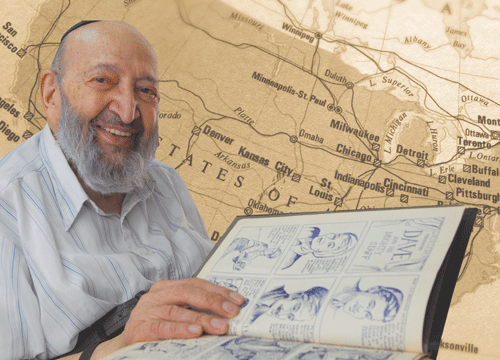
Sitting down with Mishpacha to reminisce Rabbi Goldenberg began with a dramatic episode that was a pivotal moment in his life.
The year was 1946. While Europe’s rich world of yeshivos with its centuries-long legacy of limud haTorah lay in ruins America’s yeshivah system was in its infancy. From a spiritual standpoint North America was a parched wasteland. Only a relative handful of American boys were studying in the few yeshivos that existed; the rest were attending public schools. New York boasted a total of 7 000 students learning in twenty-seven yeshivos and only three Jewish schools existed outside of New York — in Baltimore Chicago and Jersey City.
While Jews lived in many cities and towns across the United States the level of Torah observance and knowledge was abysmally low. Many Jews had come to view the Torah and its precepts as antiquated and irrelevant an obstacle to their pursuit of the security and prosperity that America had to offer.
This was the gloomy backdrop for a momentous encounter between the young Binyomin (Bernard) Goldenberg then a student in Torah Vodaath and his mentor the legendary Reb Shraga Feivel Mendlowitz one wintry afternoon in 1946. It is likely that Binyomin had no idea of the fateful nature of the conversation that was about to take place of the startling new direction his life was about to take and of the impact it would have on the entire future of American chinuch.
Create a free account to keep reading.