Rav Gershon Edelstein’s devotion to the Torah’s reasoning was what kept him going straight for a whole century
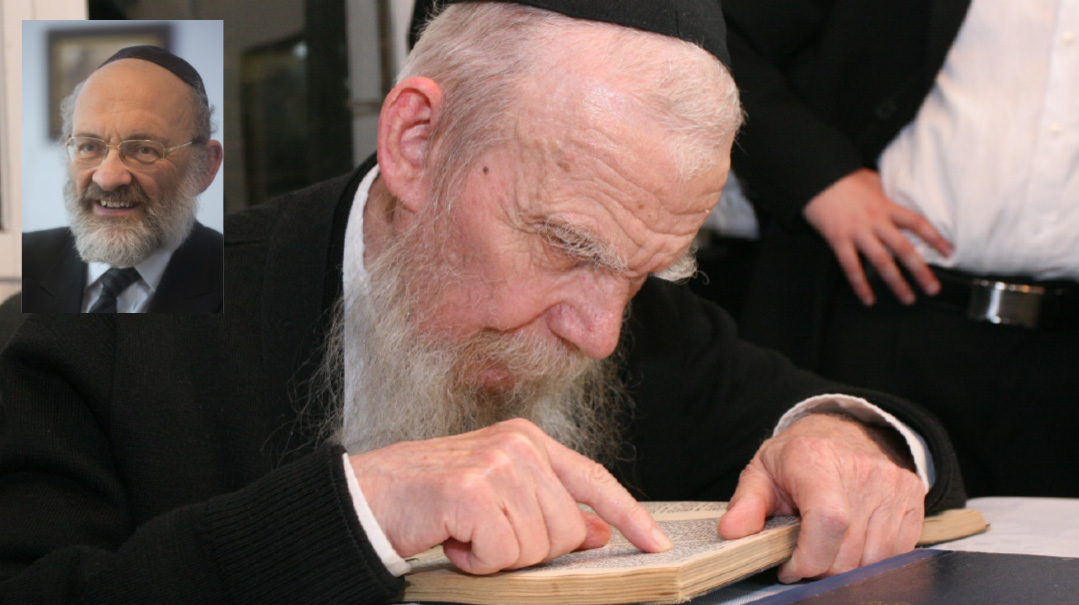
This wasn’t supposed to be a eulogy. A couple of weeks ago, it was time for me to prepare my weekly shiur on the Rokei’ach. I decided to focus on two short lines in the Rokei’ach’s poetic introduction, which speak about loving Hashem and the power of Torah. But as I meditated on these lines, I could think of no greater illustration of their wisdom than Rav Gershon Edelstein ztz”l.
The Rokei’ach writes: “No love can match a person’s love for Hashem.” Ahavas Hashem, says the Rokei’ach, is similar to interpersonal love, but on a higher level. A person experiences various forms of love in the course of life: love of one’s parents, love of a friend, love of a spouse. But the greatest love a person can develop is the love of Hashem.
Ahavas Hashem isn’t some lofty concept, a yearning of the soul for its Maker that can only be experienced by those who’ve attained spiritual purity. It’s the same type of love we’re all familiar with. To me, this idea is striking. What is human love, and how does it apply to loving Hashem?
When most people in the world talk about love, what they really mean is self-gratification. Deep down, what they really “love” isn’t the other person, but rather the benefit they derive from him, be it physical, financial, or emotional. Such love, as genuine as it might feel, boils down to a romanticized self-love.
Create a free account to keep reading.