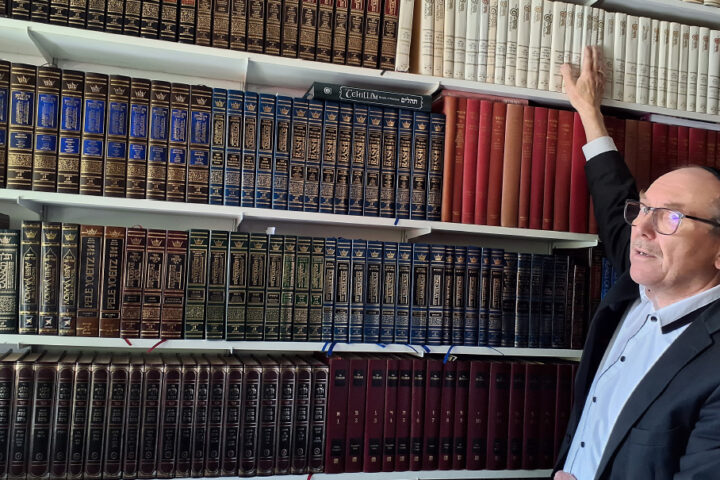
Physicist Dr. Yisrael Ury missed the last total eclipse of the sun, when Hawaii’s skies clouded over. He’s not going to let this one get away.
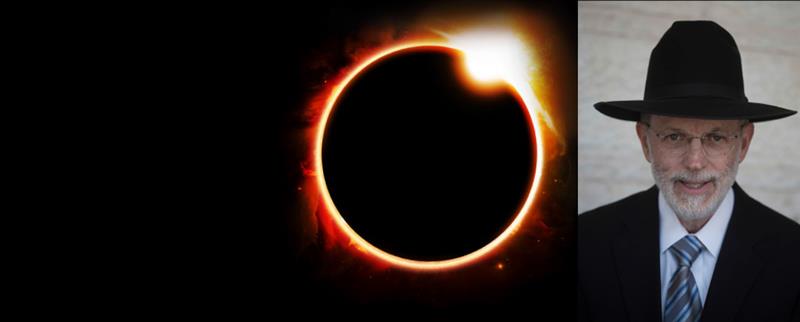

COVER UP This summer’s total solar eclipse — during which the moon from the earth’s vantage point will completely cover the sun leaving the sun’s tenuous outermost atmosphere the corona visible in a ring around the darkened ball — will be visible only to observers situated within a swath of territory several dozen miles wide cutting across the United States which will be under the moon’s shadow or umbra during the eclipse (Photos: Lior Mizrachi)
C ome August 21 at precisely 1:06 p.m. Central Daylight Time Ramat Beit Shemesh resident Dr. Yisrael Ury hopes to make good on a quest that’s 26 years in the making: to witness a total solar eclipse which he calls “one of the greatest and rarest of G-d’s wonders that are visible in our world.”
Early in the summer of 1991 Dr. Ury who holds a doctorate in applied physics was attending a technical conference in Japan on behalf of the fiber optics company he had founded. Given his scientific training he’d always had an interest in cameras telescopes and the like and upon learning that a total eclipse of the sun was to take place on July 11 of that year he decided that on the way back to Los Angeles where he was living at the time he’d make a detour to Hawaii a prime spot for viewing the event.
“When I landed at 3:30 a.m. at the international airport in Hilo on the largest of the Hawaiian Islands I found myself in the midst of a torrential downpour. Somehow I found a meteorologist who told me to head for the western side of the island where I’d find dry weather. When I got there I found others already camped out on the beach awaiting the big moment but as the time of the eclipse drew nearer the sky grew ever cloudier until the sun withdrew from view entirely. The moment had come and gone. Later I learned that back at the airport the view was clear.”
Create a free account to keep reading.