When Rav Baruch Rosenblum shared his distress over his wife’s illness with Rav Aharon Leib Steinman, the Rosh Yeshivah had one eitzah for him: “Go out there and inspire others.”
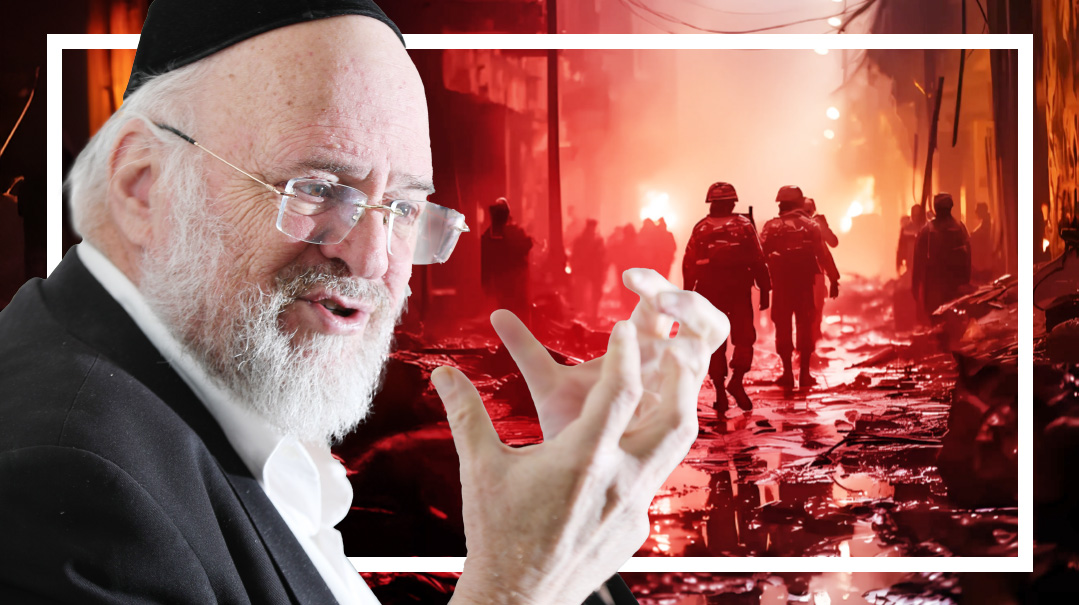
Suddenly, though, Rav Rosenblum stops. He closes the Chumash and speaks from the heart, a heart that’s feeling the pain of Am Yisrael in its suffering — with the hostages, the evacuees, the soldiers, and their families — anyone who’s in one of this war’s many concentric circles.
“These days,” he says as his eyes begin to tear, “every morning when we hear or look at the news, we’re faced with those words, ‘Hutar lepirsum — cleared for publication,’ and then there’s a name, or two or three or more. We’re so used to it already, but are you giving a second to think what those two words — hutar lepirsum — really mean? It means a widow, orphaned children, bereaved parents, entire families whose lives will never be the same. Another hutar lepirsum, and then another. And another. Hashem Yerachem!
“And what about the tens of thousands of evacuees from both the south and the north — people who have been living for three months with their spouses and children in a room and a half in a hotel, people out of work for three months — are any of you thinking about that?
“Think about a father and mother who have two or even three children in the army. They can’t sleep at night. Their phone is on, ready, 24/7, and the heart, oy, the heart, it skips a beat with every ring. But us? ‘Na, we’re in the center of the country. We’re safe. And besides, there’s Iron Dome, so everything’s good. Why worry? Nu, shoin, what do you want from me? I said Shir hama’alos mimaamakim after davening, I checked off the box.’
Create a free account to keep reading.