The impact that the fat makes on baked goods ranges from the flavor it imparts to the texture it contributes
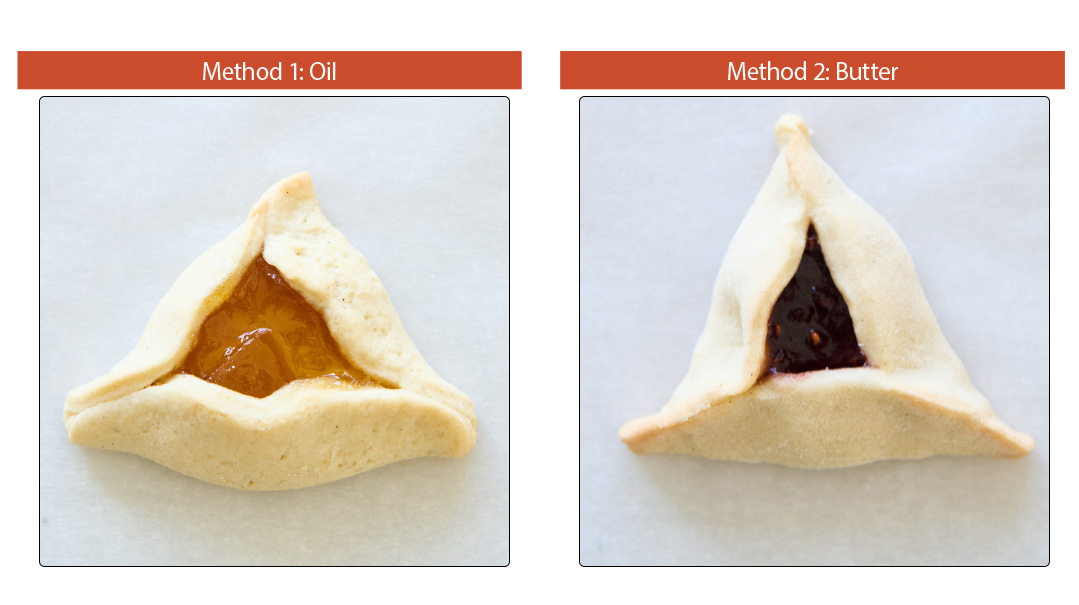
Here’s a little tidbit: Butter is a saturated fat, which is why it’s solid at room temperature. Most oils (canola, olive, soybean, sunflower, safflower, etc.) are unsaturated fats. Since butter is solid at room temperature, it’s great for creaming with sugar, which aerates the batter or dough and gives it a light, fluffy texture that can’t be accomplished with a liquid fat.
Butter consists of 80 percent fat and 20 percent water, while oil is 100 percent fat, so when substituting butter with oil, reduce the amount of oil by 15 percent.
I did slightly less for this experiment so that the oil should fit into a standard cup measurement. (1⁄3 cup=0.33 whereas 15 percent of 1⁄2 cup butter is 0.4. Call me a nerd, but accuracy is important!)
Let’s explore the results.
YIELDS ABOUT 25 HAMANTASCHEN
In the bowl of a mixer fitted with the paddle attachment, mix oil, sugar, eggs, and vanilla on medium speed. Add flour, baking powder, and salt and mix on low until no streaks of flour remain.
Create a free account to keep reading.