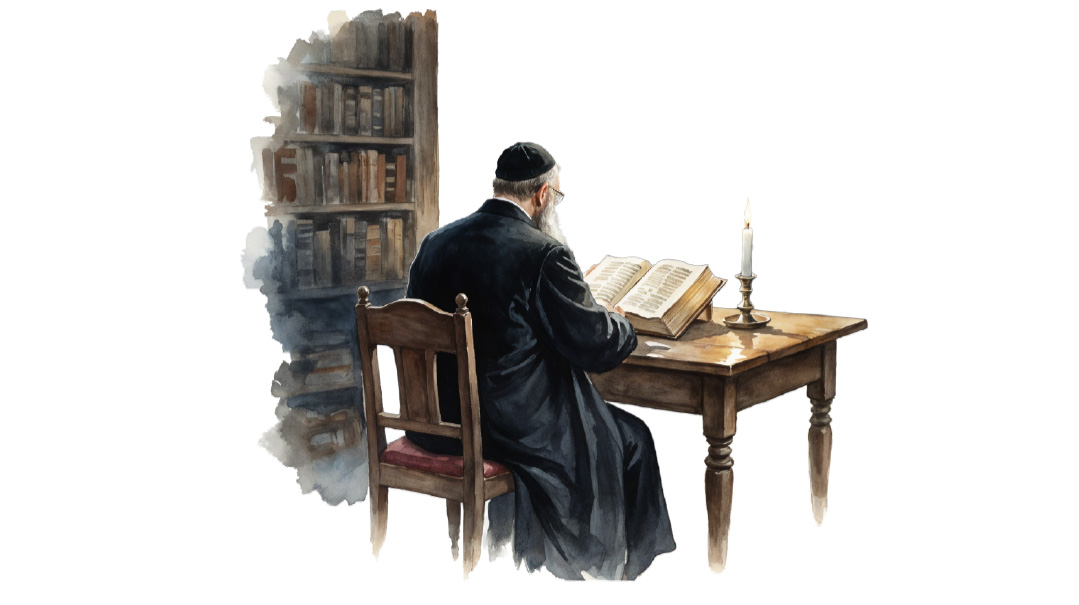
An obscure document. A forgotten tombstone. A grandfather’s memory. Suddenly, after decades of being just a “regular” Jew, a man discovers he’s really a Kohein or a Levi. What does the minyan think? How do his sons react? And most importantly, what are the personal obligations of a man who discovers he really has a special identity?

Fifteen years ago when she was in labor with her first child Mr. Allan Binder’s wife Monet developed a fever. Mrs. Binder was quickly wheeled into the operating room for an emergency Cesarean section. She cried the whole way in because she knew if her son wasn’t born naturally he would not have a pidyon haben.
In retrospect the Binders realized that the C-section prevented them from making a brachah levatalah. Kohanim and Leviim are not obligated to redeem their firstborn sons — but at that point Mr. Binder was unaware that he was a Levi. Although Mr. Binder’s father and other family members were aware of their lineage they didn’t realize its significance or that it would matter to their religious relative.
“My father thought there was no real difference between a Levi and a Yisrael” says Mr. Binder who has been a baal teshuvah for eleven years now. “He didn’t think to tell us.”
Mr. Binder found out this startling piece of information almost by accident just last year. He was chatting with his father explaining that he needed to figure out how to properly assign the aliyos for his second son Aden’s upcoming bar mitzvah. He explained that Aden’s bar mitzvah would be on Parshas Bechukosai a parshah that includes the frightening section of tochachah which many prefer not to be called up for. Rishon and sheni would be easy he explained to his father because the first would go to a Kohein which they didn’t have in the family and the second would go to a Levi which they also didn’t have.
Create a free account to keep reading.