While singles feel like they’re drowning, can a rabbinic initiative stem the tide?
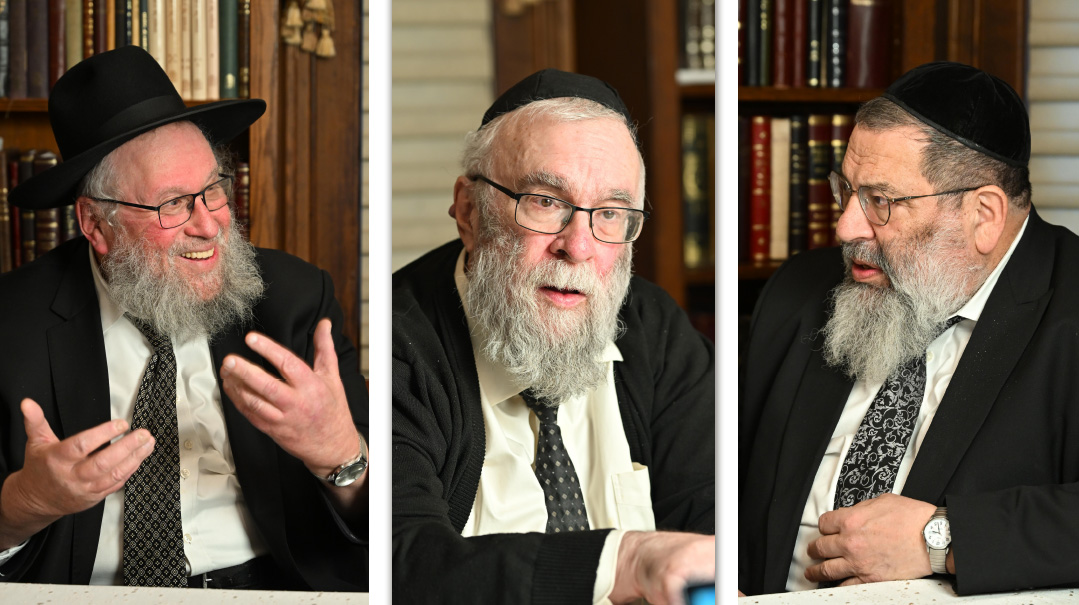
I arrived in the Queens home of Rav Kalman Epstein, rosh yeshivah of Shaar HaTorah, where I would be holding a joint conversation with him; Rav Elya Brudny, rosh yeshivah of the Mirrer Yeshiva of Brooklyn; and Rav Yaakov Bender, rosh yeshivah of Yeshiva Darchei Torah. Our discussion would focus on the shidduch crisis and fervent efforts to stem its tide.
I had never met Rav Epstein before, yet the warmth with which I was greeted was well beyond what I deserved. Rav Epstein, I will learn, deliberately shies from the limelight, though he fully belongs in its center. A towering talmid chacham, he was exposed to the grandeur of Torah from his infancy; his father was Rav Zelik Epstein, one of the Mir’s prominent talmidim who joined the yeshivah on its storied escape to Shanghai, and who was later handpicked by Rav Yaakov Kamenetsky to serve as the rosh yeshivah of Torah Vodaath. Many years later he joined Rav Kalman in Yeshiva Shaar HaTorah, a flagship yeshivah in Kew Gardens Hills, Queens, New York.
The art of concealing greatness must run in the family. Rav Zelik, too, never assumed a public role, but world-renowned askanim such as Rabbi Moshe Sherer and Rabbi Chatzkel Besser would turn to him for advice on critical communal matters. Rav Shach routinely referred Americans in need of guidance to Rav Zelik as a leader uniquely capable of providing the desired counsel.
And that capacity for wise, far-seeing advice has passed on to the next generation. While he eschews any publicity or fanfare, Rav Kalman Epstein’s office is the address for so many in need of direction, both on personal or communal matters.
Create a free account to keep reading.