This ability to get through to audiences through rhetorical power is a critical component of Rabbi Wein’s legacy
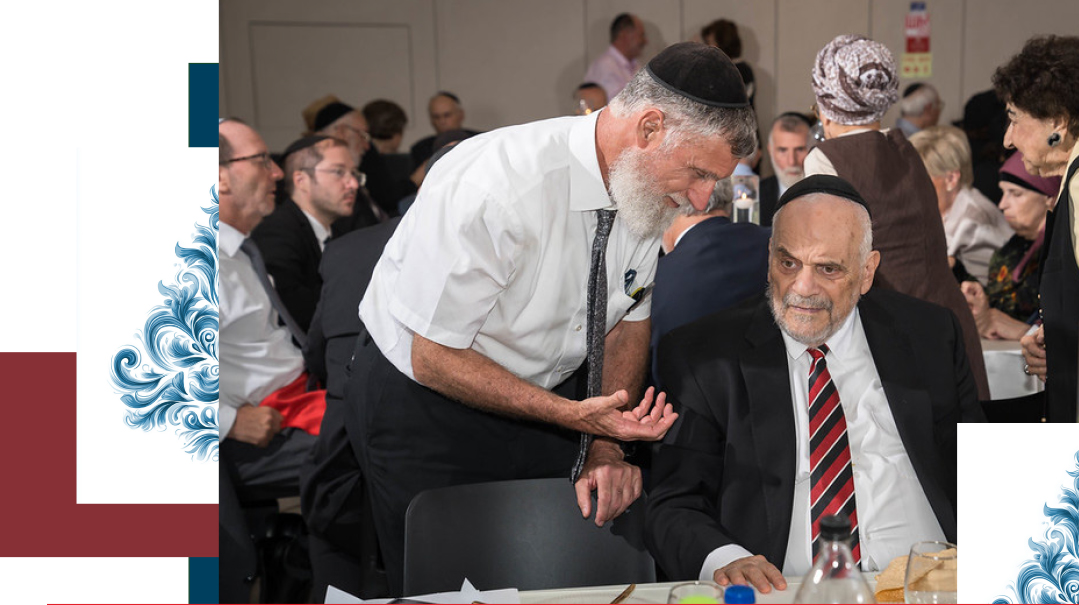
IN the summer of 2024, as Hurricane Beryl carved its destructive path through the American South, another force of nature — gentler but no less formidable — was being celebrated in Jerusalem. Rabbi Berel Wein’s 90th birthday drew an elaborate five-and-a-half-hour marathon of tributes from across the globe, a testament to the countless lives he had touched through nine decades of extraordinary service to the Jewish people. Yet amid the outpouring of admiration and affection, perhaps only one person remained unmoved by the grand spectacle: the guest of honor himself.
Rising to address the assembled multitude, Rabbi Wein delivered a classic demonstration of the wit that had enchanted audiences for seven decades. With characteristic self-deprecation that caught everyone off guard, he opened with perfect timing: “I would like to thank the National Weather Service for naming a hurricane after me.” When the waves of laughter finally subsided, he added with prophetic prescience, “I am glad I can hear all of these eulogies while I am still vertical.”
This ability to get through to audiences through rhetorical power is a critical component of Rabbi Wein’s legacy. Each year, my wife and I would make our pilgrimage to hear his Shabbos Hagadol and Shabbos Shuvah derashos, a tradition he maintained with unwavering consistency for 71 consecutive years.
In the filled-to-capacity shul, I would invariably be awarded a seat right up front. People assumed that this was a tribute to my close connection to Rabbi Wein, which was no secret. I always quoted him, and on a few occasions, he even quoted me. Not only would I attend his lectures for nearly three decades, but when I had a delicate matter to discuss, particularly when I wished the counsel of an open-minded scholar, he was my go-to. The last two books that I wrote were honored by having, as Rabbi Wein referred to it, a “Discussion” about the book in front of capacity-filled Beit Knesset Hanasi.
Create a free account to keep reading.