Fifty years after Diaspora Yeshiva Band played the soundtrack for a generation of return
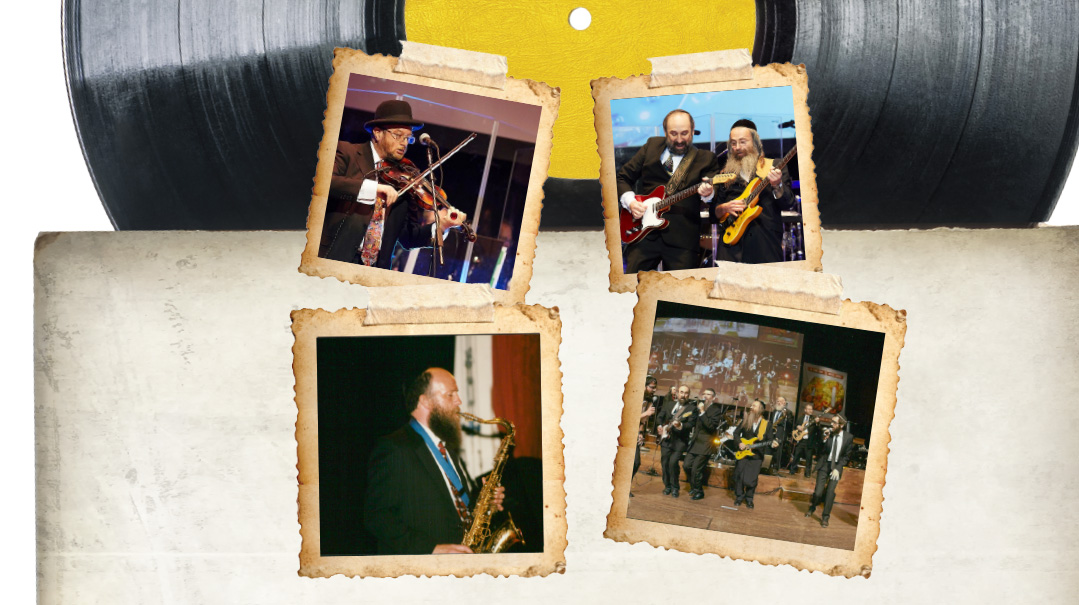
Part of that soundtrack of those times is the rhythm that reverberated off the stone courtyard adjoining King David’s Tomb on Mount Zion every Saturday night for a decade, from the mid-’70s through the mid-’80s. Of course, you didn’t have to be a musician to learn in Diaspora Yeshiva, but it certainly seemed that way to the masses who flocked to the band’s weekly concerts and purchased their six released albums.
Band leader Avraham Rosenblum’s journey to Yiddishkeit began in 1970, when he was a young, up-and-coming professional musician from Philadelphia. But a spontaneous trip to Israel with his mother changed it all — something Jewish woke up. After a short stint in a secular kibbutz, he found himself in Jerusalem’s Old City, and a fellow backpacker suggested he pop into Diaspora Yeshiva. From Rabbi Goldstein’s first “hello,” Rosenblum was hooked. Somehow, he knew it was the life he was destined for.
There were about 15 young professional-caliber musicians in the yeshivah at the time, and the band, cofounded by Rosenblum and Benzion Solomon, was launched in a 1975 Chanukah concert at the Jerusalem Beit Ha’am auditorium, while their famed Melaveh Malkah concerts took off in the summer of 1976, after the miraculous Entebbe rescue. They then released their first album, and in 1977, the group won first prize in the Chassidic Song Festival with “Hu Yiftach,” composed by Avraham Rosenblum and his friend, collaborator and brother-in-law Yosil Rosenzweig a”h (Avraham met and married Yosil’s sister Gracie in 1972, when she delivered him a package from “back home”). The following year, they again won first prize with the song “Malchuscha,” composed by Reuvain Sorotzkin.
Although many talented musicians played with the band in its early years, the Diaspora Yeshiva Band as we know it was whittled down to six musicians. The original members were Avraham Rosenblum, guitarist and lead vocalist, who composed many of their classics before returning to the US where he worked in kiruv and then became a Baltimore businessman; San Francisco-born Benzion Solomon, a disciple of Shlomo Carlebach who played guitar, violin, and banjo, and whose sons are well-known musicians and band leaders today; Rabbi Simcha Abramson, originally from White Plains, New York, who played clarinet and saxophone and was responsible for all the harmonies in the group, served as international tour coordinator, and is still a rebbi in Diaspora Yeshiva today; Gedalia Goldstein, from Long Beach, NY, who wound up at Har Tzion after a providential meeting at the Kosel with Rabbi Meir Schuster, today a Lubavitcher chassid living in Bnei Brak, and probably the best drummer I’ve ever seen play; Ruby Harris, from Great Neck, NY, famed for his violin, mandolin, and harmonica, and still playing beautiful music today in Chicago; and Menachem Herman, originally from Winnipeg, who joined the yeshivah after hearing the group on one of their US tours, and is today the singing guitarist of his own orchestra and a Breslover chassid.
Create a free account to keep reading.