Twenty years ago this week, riots terrorized the Jews in Crown Heights in what one prominent historian called the “most serious anti-Semitic incident in American history.” Yet while journalists framed their coverage as a balanced case of racial conflict and equated the accidental death of a seven-year-old boy with the lynch and murder of Yankel Rosenbaum, Jews were barricading themselves in their own homes as mobs rampaged through the streets, shouting “death to the Jews.” Two decades and several mayors la
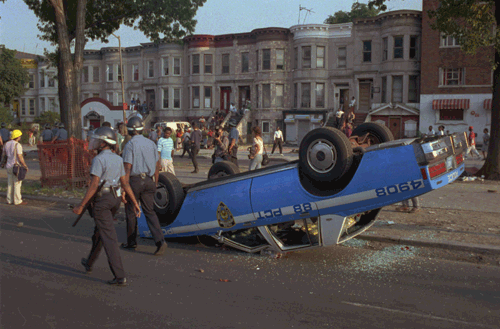
Monday August 19 1991 dawned as just another lazy hot summer day in Crown Heights a Brooklyn neighborhood in which Orthodox Jews African-Americans and Caribbeans living in close quarters form an uneasy ethnically diverse mosaic. Many of the Lubavitch community’s kids had been at camps upstate for some six weeks and were due to return en masse the next day. In the non-Jewish areas of the Heights youths unable to find summer employment during an economically depressed time hung out on the streets representing a tinderbox waiting to explode.
Rabbi Noson Kopel a musmach of Chabad’s Tomchei Tmimim Yeshiva is an actuary and practicing attorney who has lived in the neighborhood for decades. He has a pristine recall of the events that set that tinderbox aflame and for good reason – they unfolded a literal few steps from his front door: “A little after 8:00 PM that Monday evening I was at a Mishnayos shiur following Minchah at Frankel’s shul near the corner of Utica Avenue and President Street when a mispallel Naftoli Monyak ran in to breathlessly report that a car driven by a Jew had struck a black child at the corner with a large crowd gathering at the scene.
“The implications of his report didn’t really dawn on me and I decide to stay for Ma’ariv. As I left the shul I reflected with sadness about the child’s uncertain fate realizing that my own son often rode his bicycle at that same corner and if not for chasdei Hashem it could have been him. As I walked outside however and saw Utica Avenue filled with an unruly rabble clearly headed for trouble my sympathy metamorphosed into a more immediate concern for my safety and that of my fellow Jews.”
Unable to cross Utica to get home and wary of remaining on the street Kopel flagged down a frum fellow driving by and hopped into his car getting an update on what was to be the most violent week Brooklyn had ever seen.
Create a free account to keep reading.