While many of the 4.7 million people defined by the UN as Palestinian refugees have found permanent homes some 1.4 million still dwell in teeming refugee camps in Israel and the Middle East. After generations of squalid living conditions and a steady diet of hate these refugees view next week's UN vote on Palestinian statehood as the first step toward a right of return. Has the UN perpetrated a culture of Palestinian victimhood and resentment?
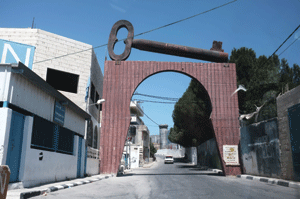
Compared to the Shuafat refugee camp on the outskirts of Jerusalemon a slope
between the Jewish neighborhoods of Pisgat Zeev and French Hill Aida looks
like paradise. There the stench of rotting garbage in the summer sun attacks
the senses as soon as one arrives and remains throughout a visit to the camp.
The barely paved roads seem to have more potholes than smooth surface. In
contrast to Aida the overcrowding here is palpable immediately: Estimates of
the total camp population range from 35 000 to 65 000 people in approximately
1.5 square miles; and as Shuafat is located within Jerusalem’s
municipal borders most residents carry Jerusalem
identity cards. At least half are not registered as refugees.
Both camps are part of a fifty-nine-camp network established to house
Palestinian refugees in the aftermath of Israel’s War of Independence in
1948. Education health and relief services are provided to registered
refugees by the United Nations Relief and Works Agency for Palestine Refugees
(UNRWA) which leased land from the governments of Jordan
Egypt Syria and Lebanon in the 1950s to create the
camps.
In a region where loyalties — and suspicions — run deep and absolute
there is no organization that arouses more ire on the part of many pro-Israel
advocates who say that UNRWA is now the largest nongovernmental organization
(NGO) in the Middle East and that it promulgates everything from “refugeeism”
among the children and grandchildren of 1948 refugees to active support for
Hamas and suicide bombers.
Today UNRWA bears little resemblance to the temporary relief arm of the
United Nations that was formed in 1950 to provide aid to refugees from the 1948
War of Independence. From an original budget of $33.7 million that was used
mainly to distribute food and healthcare to refugees living in tent cities in
Israel Jordan Syria and Lebanon UNRWA now has an annual budget of more than
$1.1 billion and the organization employs 24 000 workers to attend to the
needs of an estimated population of 4.5 million registered refugees — from an
estimated 400 000 to 700 000 who initially abandoned their homes — in camps
located in Jordan Lebanon Syria and Judea and Samaria.
Create a free account to keep reading.