What happens when an Anglo-yekkish shul in London hires a chassidish rav from Montreal?
Photos: Avi Yodaiken, Yossi Katz
What happens when a shtreimel-wearing rav from Montreal takes the helm at a historic Anglo-Yekkish shul? In London’s Hendon Adass, the unlikely partnership unleashed a boom and became a blueprint for carrying old traditions into a new generation
For everyone involved, the process of choosing a rabbi for a community can feel a bit like a shidduch.
Both sides do extensive inquiries and background checks. There’s the initial nervous meeting. Then, if all goes well, it’s clinched by the l’chayim.
But what happens when the process comes to a successful end but the rav and his community look nothing like one another?
That’s the unusual situation that Hendon Adass, a flagship Yekkish-rooted, century-old kehillah in northwest London, found itself in.
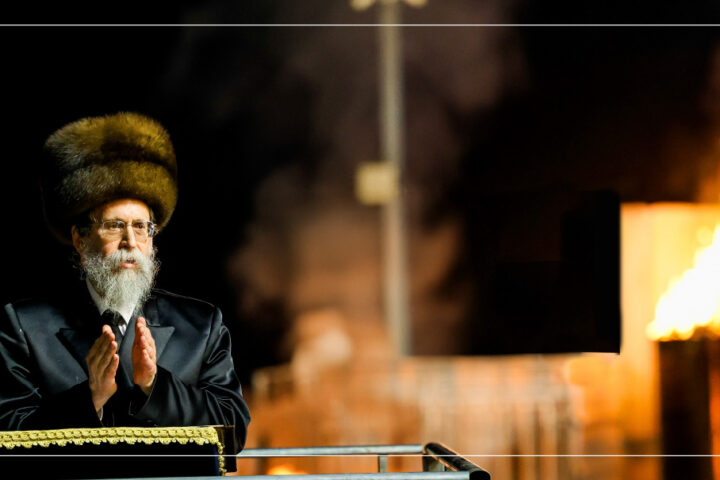
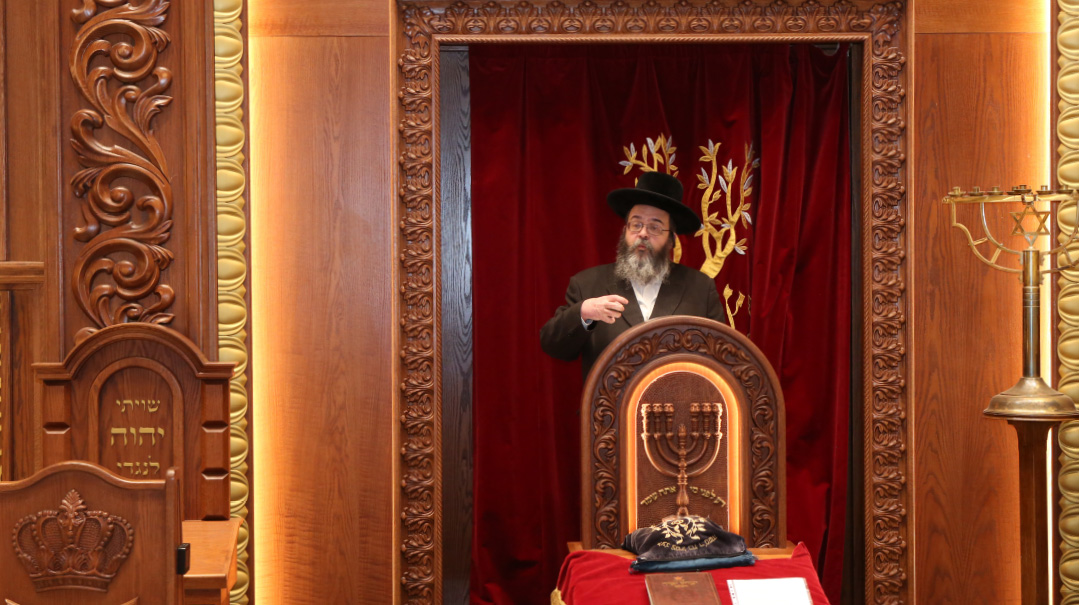
At first glance, a visitor to the large square building might struggle to fathom what binds Rabbi Shlomo Yitzchak Bixenspanner — arrayed in full chassidic regalia, with Yiddish as his first language — and his burgeoning community.
Yet, over the last decade, this unlikely pairing has quietly become one of northwest London’s communal success stories — the relationship built around a shared reverence for mesorah and a determination to carry old traditions confidently into the future.
That, in turn, is why the story of Rabbi Bixenspanner’s post is also a larger one: The quest to regenerate the grand old shuls of yore.
From Boro Park to London, some of the large edifices that were once home to hundreds of mispallelim are struggling, some of them subdivided or sold off as communities change. The very grandeur that once attracted members now makes these historic shuls difficult to sustain.
Fresh from heading a shtibel in Toronto, the Montreal-born Rabbi Bixenspanner arrived at a shul facing decline. “People told me that it needed a major facelift,” he says.
Now, a decade after he arrived, this is a shul and community that has undergone a total rebirth. With nearly a hundred new families, a flourishing kollel, shiurim, and an atmosphere of youth, Hendon Adass feels like the future.
That turnaround is why its rabbi is now equipped to share what he’s learned about the process of regenerating the stately glories of old for a new generation. And the counterintuitive secret, says Rabbi Bixenspanner, is not about dumbing down — lopping off branches of cumbersome mesorah in a vain quest to attract a generation that wants something less formal.
Past Forward
Head into Hendon Adass at almost any given time and there’s a good chance that somewhere in the shul building — now undergoing a major renovation — somebody will be bent over a booklet. Not just idly leafing through, but devouring page after page.
More often than not, those pages will contain Rabbi Bixenspanner’s distinctive fusion of halachah and history: densely researched essays that are really a sustained attempt to understand Torah subjects in their real-world context.
“Technological developments often have profound ramifications on halachah,” reads the introduction to one recent issue. “One such development is the postal system.”
“It is difficult to imagine today — in an era of instantaneous communication and rapid travel — what life was like without a functioning postal system. Yet for much of history, this was the reality.”
Those are vintage Rabbi Bixenspanner lines, in a discussion that goes on to trace the development of England’s Royal Mail under Henry VIII and Charles I before arriving at practical halachic ramifications involving amirah l’akum on mail sent before Shabbos, mishloach manos dispatched through postal systems, and even questions involving agunos — all because, as Rabbi Bixenspanner puts it, “the postman became a halachic player.”
Another booklet moves from the minhag of Yotzros into the vanished world of old Ashkenaz kehillos, explaining not merely how these piyutim emerged, but why generations of Jews regarded them as indispensable parts of the Yamim Noraim experience — and why older minhagim cannot simply be discarded as inconvenient relics.
Elsewhere, a discussion about menschlichkeit and public comportment opens with Rav Meir Shapiro being challenged in the Polish parliament over Chazal’s statement, “Atem kruyin adam.”
“If you observe the behavior of Jews anywhere in the world,” Rabbi Bixenspanner quotes Rav Meir Shapiro as responding, “they instinctively come to one another’s aid in times of need, even where they have no prior connection… A Jew is never a stranger to a fellow Jew.”
What begins as a historical episode becomes an entry point into a broader halachic discussion about derech eretz and what it actually means for a Torah Jew to behave like a mensch.
These booklets go some way to explaining the chemistry between Rabbi Bixenspanner and Hendon Adass itself — a relationship that, at least externally, did not seem an obvious fit.
The shul that Rabbi Bixenspanner arrived at ten years ago was a historic Yekkish-rooted kehillah whose roots stretched back to the German Jewish world of a century ago. And while today it is visibly full of youth and energy, this was clearly a community that needed fresh direction and rebuilding.
Rabbi Bixenspanner, meanwhile, came from an entirely different-looking world.
“I grew up in a chassidish-oriented home in Montreal,” he says. “Where we come from, we’re proud Hungarians.”
On his father’s side, he says, the family came from rabbinic stock. “My grandmother, my father’s mother, was a bas gedolim, descended from a long line of rabbanim including the Kitzur Shulchan Aruch, the Shemen Rokeach and Reb Mordche Banet,” he says. “She was really my inspiration to become a rav.”
She came from the town of Vorohl in Romania, near Satmar, where her father, Rav Yissoschor Dov Lowy, served as rav. The town itself, Rabbi Bixenspanner notes, was known for its Hebrew printing press.
His paternal grandfather was born in Klausenburg — today known as Cluj — and after the war, the couple eventually settled first in Paris and later in Montreal, where the future rabbi of Hendon Adass was raised.
Rabbi Bixenspanner’s sense of rabbanus as a chain of transmission was reinforced by the stories about earlier generations of the family that he heard growing up. One concerned his maternal grandfather, Reb Moshe Chaim HaKohein Snyder ztz”l, who was stranded for months before the war, behind the sealed Russian border carrying little besides his tallis, tefillin and a Kitzur Shulchan Aruch. Unable to continue traveling, he found a chavrusa and spent the months learning the sefer inside out — knowledge that later proved invaluable when he served as a rav in the Bergen-Belsen DP camp after the war.
Although Reb Moshe Chaim later became a successful businessman in São Paulo, Rabbi Bixenspanner says, “his head was always in learning.” That dedication eventually led to the publishing of a couple of seforim from his writings.
Still, Rabbi Bixenspanner’s path to rabbanus wasn’t typical, if only because he came from a world where rabbanus, in the conventional communal sense, was not always the central model.
“A chassidish shul doesn’t need a rav,” he says. “They have a rebbe, and they have dayanim. You’re not going to find many chassidish shuls with a rav. There are a few, but it’s rare.”
And yet in his family, rabbanus was a given.
“It’s all my grandmother’s credit,” he says. “My father’s mother was an almanah. My grandfather passed away when I was eight or nine, and I used to eat with her every Shabbos. We used to talk, and all we spoke about was the zeides and the rabbanim.”
Those influences meant that Rabbi Bixenspanner gravitated toward learning halachah, first in Montreal by Rav Yechiel Mayer Katz, the Dzibo Dayan, and then in Lucerne under Rav Yitzchok Dov Kopplemanz ztz”l. Subsequently, he was meshamesh Rav Yechezkel Roth, the Karlsberger Rav of Boro Park for three decades.
Rabbi Bixenspanner’s first full-time rabbinical post was at Kahal Yereim, a heimishe shul in Toronto. But after prices in the city triggered a middle-class exodus that left his own shul with dwindling membership, Rabbi Bixenspanner looked abroad.
Through the international rabbinic grapevine, the name Hendon Adass came up, but it sounded like a long shot. Externally at least, there was little reason to assume that a shtreimel-wearing chassidish rav from Toronto would become the figure to breathe new life into a historic Anglo-yekkish kehillah.
Rabbi Bixenspanner himself knew the move carried risks.
“I came from Canada with a big family,” he says. “I knew it was a gamble. But I’m a worker and I love challenges, and I baruch Hashem have a wonderful rebbetzin who is a major support.”
And yet, Rabbi Bixenspanner says, what initially bridged that apparent gap was precisely the unusual blend of history, halachah and minhag that would later become the hallmark of his writing and leadership.
“When I first came for a Shabbos to try out, it was that content that was a selling point,” he remembers.
Teaching Tradition
Hendon Adass itself, he discovered, was far more layered and internally diverse than was obvious from the outset.
“The founders were a mix of pure-bred Yekkehs and Ostjuden — Eastern European Jews who grew up in Germany.
“Most of the founders were from Leipzig. But in Leipzig, as in many other cities in Germany, there were Ostjuden. So that’s why we have many diverse minhagim, including some members who wear a gartel, and an even split between those who do and don’t wear tefillin on Chol Hamoed.”
To Rabbi Bixenspanner, those details were not curiosities but clues to the deeper story of the kehillah itself.
“What really, really helped me,” he says, “was that we came out with a sefer on the minhagim of Hendon Adass, which I spent months researching.”
In order to understand the kehillah properly, Rabbi Bixenspanner says, he deliberately sought out older members and surviving founders — including some living in retirement homes and others in Eretz Yisrael.
“I made it my business to go and meet the zekeinim,” he says. “I wanted to meet the last surviving founders in order to get a good understanding of the past.”
He became fascinated by the way old Ashkenaz worlds overlapped and intertwined. “Rabbi Pinchas Roberts, who was the previous rav at Hendon Adass did wear tefillin on Chol Hamoed. I don’t wear tefillin. And the first rav — Rabbi Knoblovitch was a Gerrer chassid who had a Germanic appearance — probably also didn’t wear tefillin.
“That’s what this community is about. Everyone follows their minhag, and we respect each other. There’s a cohesion.”
That, Rabbi Bixenspanner realized, was the hidden language he shared with the kehillah: a deep reverence for minhag Ashkenaz.
“One of the big challenges that rabbanim encounter is that there are certain minhagim that youngsters don’t like — for example, Yotzros. But I explained it to them. I explained the beauty of it, and how these minhagim are so meaningful.”
It helped that Rabbi Bixenspanner himself was something of an outsider who had become enthused by the lengthy glories of the original Ashkenaz liturgy. “I think this resonated with them because I grew up with a chassidishe background. Many of the things they don’t do there — I came here and realized the beauty of them.”
The point, Rabbi Bixenspanner would say, is that the Ashkenazi tradition is more coherent than at first seems — that the distance between Yekkish and Hungarian minhagim is not as a vast as it initially appears.
“My forebears were all Ashkenazi rabbanim from Hungary and Oberland. This is something people don’t realize — Satmar itself was an Ashkenaz city. The Rebbe had his own shtibel, but on Yom Tov or Shabbos Hagadol he would go to the town shul where he was an Ashkenazi rav.
“So, I really identify with going back to our roots, because we’re all Ashkenazim.”
Building Plan
Theory apart, though, the question was whether those instincts could actually be translated into communal renewal. Because beyond any doubt, Hendon Adass was a community that needed fresh direction. When Rabbi Bixenspanner arrived, the numbers were heading steadily one way.
“Every year there’s a president’s report,” he says, “and on the report it says how many new members came and how many members went up to Shamayim. And for years the incoming was less than the outgoing.”
The arithmetic, he says, was simple.
“You can’t keep a business viable if the accounts payable are more than the accounts receivable.”
After the previous rav had retired — and like many historic kehillos across the Jewish world —Hendon Adass faced a difficult question: Whether large communities built for another era could still attract a younger generation.
The heart of the problem was that the children of longstanding members who had spent years learning in Eretz Yisrael were building their lives elsewhere instead of naturally gravitating back to their parents’ kehillah. Newer, smaller shtiblach were opening across northwest London, while the old institutions struggled to figure out how to recreate themselves for a younger world.
But Rabbi Bixenspanner believed there was no realistic alternative except to rebuild them. “There are so many shtiblach that are literally a house,” he says. “This infrastructure is invaluable. It doesn’t exist.”
In major Jewish centers, he asserts, it has become almost impossible to create major communal infrastructure from scratch. The costs are prohibitive and space is limited. Newer kehillos often end up confined to improvised smaller premises that struggle to grow organically over time. The challenge, therefore, was not whether old kehillos would survive unchanged. It was whether they could be renewed without losing the very traditions and dignity that made them worth preserving in the first place.
Rabbi Bixenspanner’s rule for successful shul regeneration might be summarized as: makeover, not takeover.
“It’s more difficult to bring back an old shul to life than to start a new one,” says Hendon Adass board member Ari Stimler, “because you have to keep the older members who are used to certain things being done for many years and then try and pull in a younger crowd and offer them something that the current members can cope with. Bridging those two is the hardest thing to do. Once you have that balance, and the members of the shul understand the need to adapt to bring in new blood, then you will succeed.”
Rabbi Bixenspanner’s solution was effectively to create a kehillah operating at multiple speeds simultaneously. The older generation would continue to feel at home in the formal atmosphere and old minhagim of the main shul. But younger members would also be given space to build a chevreh and eventually see themselves as stakeholders in the future of the kehillah.
“This is something you see all over the world,” Rabbi Bixenspanner says. “In America, any type of shul like Hendon Adass is gone, because the young people don’t come.”
But Hendon Adass still possessed something irreplaceable: infrastructure, identity, and generations of accumulated mesorah.
The challenge was how to persuade younger families to see themselves inside that story.
Many younger families returning to northwest London after years learning in Eretz Yisrael were still deciding where to settle permanently. Rabbi Bixenspanner’s strategy was to reach those families before they drifted elsewhere. “They finish their stint in Eretz Yisrael and then they come back,” he says. “So we’re targeting those people before they settle in.”
That became the nucleus around which the younger chevreh began forming.
“We started with approximately 40 guys. It grew to 80. So here, with tremendous siyata d’Shmaya and with vision, we were able to convince a group of young chevreh that we were willing to play ball, and that we were willing to give them over the reins — that they were going to run the shul.”
Growing Pains
The experiment that would eventually reshape Hendon Adass began at almost the least auspicious moment imaginable.
It was Shabbos Zachor 2020 — literally weeks before Covid shut the Jewish world down.
For some time, Rabbi Bixenspanner had been carefully developing an idea that would allow younger members to build their own chevreh within the wider framework of the shul itself. The proposal was to create an additional upstairs minyan geared toward younger families while the main minyan continued below.
“We said, let’s try a one-off,” he recalls. “The reason we had to wait until then was because we wanted to use the hall, which was generally used for simchahs with few empty Shabbossim available.”
Rabbi Bixenspanner wrote directly to the board.
“I said, ‘I usually have a policy not to get involved in things about the shul’s operations that are not halachic. But here I feel I have to make an exception, because I feel this is the future of the shul. I beg you to allow a minyan — a one-off minyan on Shabbos Zachor.’ ”
The idea represented a significant adjustment for a traditional Anglo kehillah whose rhythms had been established over decades. Some members worried that introducing another minyan inside the building itself might gradually pull the shul in different directions.
Rabbi Bixenspanner, though, saw the arrangement very differently.
“I said no — the vision is that they’re going to come down and join the shul.”
The goal, he explains, was never to create a separate kehillah, but to create enough space for younger members to build relationships and eventually feel ownership over the future of the broader institution itself.
The initial expectations were modest.
“They said, ‘We want to see how many people. You’re not going to get 20 people.’ ”
More than 60 came.
Then Covid arrived.
For months, communal life across the Jewish world froze in place. But once the restrictions eased and the shul slowly resumed activity, the upstairs minyan resumed as well — and gradually became the nucleus around which a younger chevreh began forming.
That, in many ways, became the underlying philosophy of the rebuilding effort: A kehillah operating at multiple speeds simultaneously, preserving the slower rhythms and formal atmosphere valued by older members while also creating enough room for younger families to form their own social and Torah nucleus inside the broader institution.
“The point,” Rabbi Bixenspanner explains, “is that if you want people to come, no one is coming trickling in one by one. The way to do it is to create a core.”
Once that core existed, he says, the atmosphere changed naturally.
“The younger members become a chevreh. They do things together, they enjoy each other’s company. There’s a kiddush every Shabbos, which was also something the old chevreh never had. There’s socializing, there are events and trips — things that attract young people.”
The trips themselves reflected Rabbi Bixenspanner’s larger worldview. Journeys to Poland, Morocco, and Portugal became extensions of the same fusion of Torah, history and communal identity that animated his writing and shiurim.
Portugal in particular opened a window into the history of the Bnei Anusim and the vanished Jewish world of Iberia. “I speak Portuguese,” Rabbi Bixenspanner says with a smile. “My mother grew up in Brazil, so I picked up the language.”
For the younger members especially, the goal was not simply attendance, but belonging.
Ari Stimler offers more perspective on what it takes to duplicate the renewed Adass model. “The second thing I would say,” he explains, “is that you have to offer a carrot to bring younger chevreh in. Otherwise why would they come? And that can be in many forms, through getting them more involved with the running of the shul, creating a chemistry through events, and even more importantly through Torah. Shiurim, chaburahs, and trips to kivrei tzaddikim — all this creates unity and helps attract more to come.”
But in the face of this new influx, Rabbi Bixenspanner understood that the older generation needed to feel that the community they had spent decades building was not being quietly dismantled around them
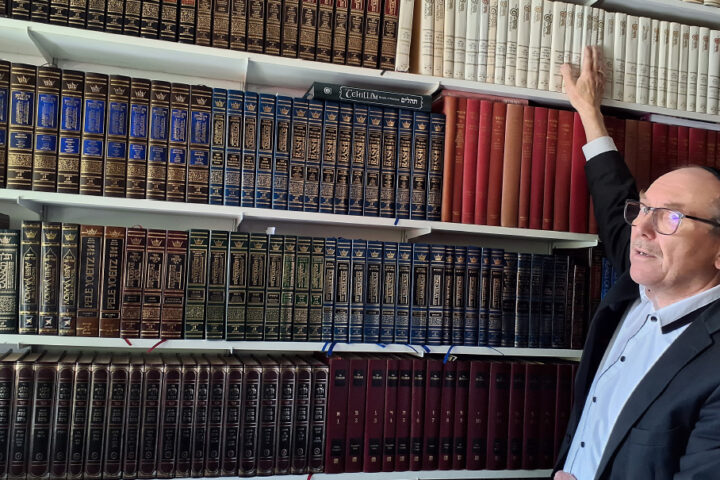
One symbolic example of fusing the old and new involved the stained-glass windows, which remained untouched during the renovation despite pressure for broader changes. Other areas, though, became central to Rabbi Bixenspanner’s longer-term vision for the future of the shul. The old pews gave way to tables and chairs better suited to a growing beis medrash culture. Extensive new seforim shelves were added. And at the center of the redevelopment stood the kollel Rabbi Bixenspanner brought into the shul — an attempt to place full-time learning, not merely programming or atmosphere, at the nexus of the kehillah’s future.
Today, the expanded beis medrash has become one of the tangible focuses of the rebuilt community: avreichim learning through the morning, younger members lingering over seforim after davening, and shiurim continuing long after the formal service has ended. Increasingly, the old Yekkish structure and the newer energy stopped competing with one another and instead began slowly intertwining.
The younger members, meanwhile, were told repeatedly that the goal was not to create a permanent breakaway minyan but eventually to merge back into the main kehillah.
“Being transparent from the beginning is extremely crucial,” Rabbi Bixenspanner says. “The young chevreh need to be told from the very beginning that the ultimate plan and end goal is to merge.”
Over time, with tremendous siyata d’Shmaya, says Rabbi Bixenspanner, the experiment began to work largely as intended. The younger nucleus that first formed upstairs increasingly filtered into the broader life of the kehillah itself — not replacing the older structure, but gradually renewing it from within.
Home Office
One image Rabbi Bixenspanner used during his hachtarah (rabbinical inauguration) as rav of Hendon Adass ended up capturing much of the philosophy that would guide the years that followed.
The derashah itself revolved around a mishnah in Maseches Succah (56a) discussing the mishmar hanichnas and mishmar hayotzei — the incoming and outgoing groups of Kohanim in the Beis Hamikdash.
“According to Rabi Yehuda, they gave more from the lechem hapanim to the mishmar hanichnas because they had to close the doors that the mishmar hayotzei opened on Shabbos morning before finishing their shift,” Rabbi Bixenspanner explained.
“Every morning, the Kohanim would open and close the doors. But on Shabbos when there was a changing of the guards, the incoming guard would close the doors opened by the outgoing guard, which the Gemara calls hagafas delasos. Who closed the doors? The incoming mishmar. So because of that they got extra reward.”
That, he told the kehillah, was the Torah model of transition.
Then — given the fact that the hachtarah coincided with President Trump’s first inauguration — he reached for a contemporary political image that appeared in this very magazine.
“I don’t know if you remember what was on the cover of Mishpacha magazine the week of Trump’s first inauguration,” he said. “There was a picture of a bulldozer, and Trump was sitting there, and anything and everything Obama had made was being bulldozed.”
“That,” Rabbi Bixenspanner told his kehillah, “is exactly what we are not trying to do here.”
The spirit behind that example would remain central to the rebuilding process that followed.
“We’re not here to undermine,” he remembers saying. “We’re building on the foundations that the previous rabbanim built. This is mishmar hanichnas and mishmar hayotzei.”
The mechanics of rebuilding a historic shul, Rabbi Bixenspanner discovered, are often easier than the human side. Every change touches memories. Every adjustment risks being interpreted as a judgement on previous generations. “The rav and lay leaders should be willing to listen to feedback and to apologize when mistakes are made,” says Jeremy Rowe, another board member.
“The rav has to make sure that the older members feel that he has their best interests in mind and that he genuinely cares for them,” Rabbi Bixenspanner says.
The temptation facing any new rav arriving at an established kehillah, he explains, is to demonstrate momentum by uprooting whatever came before. Rabbi Bixenspanner believes the opposite. “You can’t come into a place and undo previous generations.”
Rebuilding a historic kehillah, he opines, depends on convincing older members that the world they had spent decades building was still valued even as the community evolved around them.
That balancing act often requires constant judgement calls. It also requires a particular kind of rabbinic temperament. “The rav has to be a punching bag,” Rabbi Bixenspanner says matter-of-factly.
In an established kehillah especially, he explains, tensions inevitably surface. Younger members want movement; older members fear losing the atmosphere and traditions they spent decades preserving.
Rabbi Bixenspanner believes much of the work happens not through dramatic speeches or policy decisions, but through patient day-to-day trust-building.
That means accessibility. It means listening. It means absorbing frustrations without allowing disagreements to harden into camps.
Members know that for a large portion of the day, Rabbi Bixenspanner can usually be found somewhere inside the building itself — either learning in the kollel or sitting in the small office just behind the aron hakodesh. The office itself was an innovation that Rabbi Bixenspanner pushed for after arriving at Hendon Adass. “I said from the beginning,” he recalls, “that my second home is going to be the shul.”
“There will inevitably be shul-goers who disagree, often strongly, with change,” says Jeremy Rowe. “However, this is at least somewhat softened if the rabbi has a strong personal connection with each congregant and they understand that the changes which are adopted are l’shem Shamayim.”
In Hendon Adass, Rowe says, Rabbi Bixenspanner makes a point of knowing the names of children and building a rapport with them. “This can only happen if the rav really cares for them.”
Old Meets New
The imposing structure that is Hendon Adass today feels in some ways like a reflection of the process unfolding within it.
The building itself remains partly under renovation: sections already transformed, others still mid-construction. New wooden paneling and seating now sit alongside elements carried forward from the previous century, including the stained-glass windows that continue to cast their colored light across the interior exactly as they did generations ago.
The rhythm of the kehillah has evolved in much the same way.
There is now a kollel humming through the morning hours, younger members lingering over coffee and seforim after davening, Sugyos D’Kallah programs before Yom Tov, and children moving easily through spaces that only a decade ago felt markedly quieter.
Yet at the same time, the atmosphere remains recognizably connected to the roots and rhythms that built the community in the first place.
For Rabbi Bixenspanner, who crossed an ocean to build that vision, the lessons extend far beyond one London kehillah.
“We have to find a way to rebuild historic communities,” he says. “And the key is to infuse the younger generation with pride and understanding of their traditions — because this is a generation that wants to understand before it practices.”