Walking on Rechov Chanah in Jerusalem’s Shikkun Chabad, you’ll notice a street sign posted on a set of steps. “Maalos HaRav Nanes” the sign declares, commemorating a man who survived twenty years in the Soviet Gulag, later moving to Eretz Yisrael and teaching Torah to hundreds who visited his house on Rechov Chanah. Mishpacha examines the four phases of a fascinating life.
I t had always been Berel Neumark’s intention to celebrate his uncle Reb Eliezer Nanus’s 100ths birthday by throwing him a large party. Unfortunately that birthday never arrived. Instead Reb Leizer as he was affectionately called passed away just three months short of the landmark date. Rav Leizer’s passing thirteen years ago marked the end of an era – in which people who survived Stalin’s Gulag were still alive and approachable eager to share the miracles of their triumph.
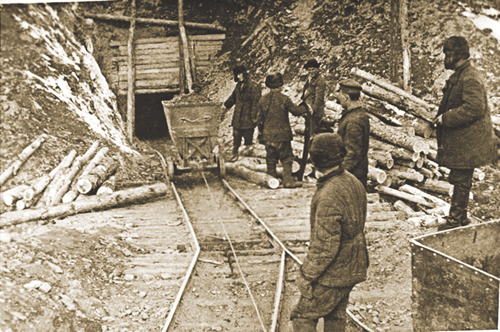
You may not recognize the name Eliezer (Leizer) Nanes but you may very well know his story. After spending twenty years in the Soviet Gulag and never once desecrating Shabbos or Yom Tov Reb Leizer Nanes wrote a book documenting his experiences there. His story has come to epitomize the spirit of a unique group of Russian Jews who kept Yiddishkeit with extraordinary mesirus nefesh. These were Jews who defied the anti-Semitic onslaught during government-inspired pogroms under Russian Czar Nicholas II which eventually morphed into a direct assault on Yiddishkeit during the Bolshevik Revolution and throughout the Communist era. They did so by building an underground network of chedarim yeshivos shuls and mikvaos — all the elements that characterize Orthodox Jewish identity. They often paid a heavy price for their efforts but their personal sacrifices enabled vestiges of Yiddishkeit to survive in the Soviet regime.
The name Eliezer Nanes is unfamiliar because he wrote his book Subbota (Shabbos in Russian) under the pseudonym Avraham Netzach. Reb Leizer earned the nickname “Subbota” when he was forced to stand on a watchtower with his upper body exposed to the frigid Siberian winter air with a sign stating “Subbota” hanging from his neck for refusing to work on Shabbos or Yom Tov. The book first appeared in print in Yiddish in 1972 a year before Aleksandr I. Solzhenitsyn’s The Gulag Archipelago was published and it was translated into English in 1979. The book has long been out of print – anyone willing to sell their copy demands a hefty price for it — and Reb Leizer’s family members are in the process of reprinting an expanded version of the book.
Reb Leizer was originally imprisoned for helping to sustain a network of underground chedarim. He accepted this task when his father-in-law, Rav Avraham Eliyahu Neumark, rav of Rostov on the Don, died of a massive heart attack attributed to intense fear and pressure while running this secret network. At that point, Stalin was trying to bolster his control of the Communist Party. He initiated the “Great Purge,” eliminating officials and individuals perceived as threats. These so-called undesirables were either shot or sent to Siberian labor camps.
Create a free account to keep reading.