A good lulav isn’t about length, especially because there’s the practicality of carrying it around, but we’ve had a few people who insisted on six or eight-foot spears.
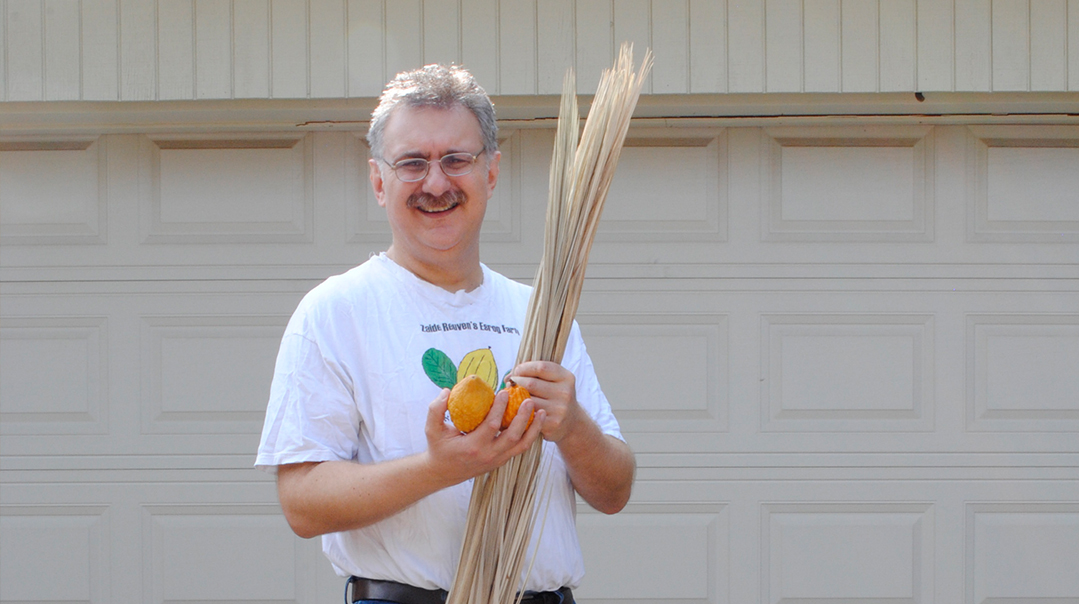
David Wiseman, a British research scientist in Dallas, Texas, is the owner of Zaide Reuven’s Esrog Farm.
I was in a gemara shiur on Hoshana Rabbah, and since everyone had bentsched lulav and esrog, someone said, “Let’s taste it.” I saw seeds and asked if I can take them home to plant. I forgot all about it, but a few months later, I went to clean out my garage and there are these little trees. I started selling esrog trees as houseplants, along with a book I wrote about esrogim.
About 15 years ago, I got a call from a lady in Newark who wanted esrogim for her church for Halloween. Pardon? Halloween is a pagan celebration of the fall festival, and her church decided to celebrate the Feast of Tabernacles — Succos — because they wanted to do something wholesome, keep the kids off the streets. I asked a sh’eilah before I started selling her posul esrogim. And then it was, why not sell kosher ones? We now supply the major shuls in Dallas and we have a steady and growing clientele on the internet. It’s an interesting story, to say a church choir leader launched this.
Most of our esrogim come from the Kirkpatrick citrus farm in California. Rabbi Yaakov Shlomo Rothberg is a partner there, and we get a smaller number — Yanover, Moroccan, and Israeli — from other suppliers. Every few years there might be a problem with one of the minim — poor crop, quality, whatever. One year the hadassim didn’t look too good, we had a whole team of kollel men, rabbanim, and others opening each package and checking every stem. Aravos are the most sensitive to temperature and storage, and the year of 9/11, with all the plane travel issues, they arrived in a very poor state. We didn’t want to have that again, so now we grow our own as well, as a backup and for hoshanos; we can supply the whole of Dallas if need be. And lulavim we used to get from Egypt but recently it’s from California.
Create a free account to keep reading.