Ghajar, a sleepy village along Israel’s pastoral northern border with Lebanon, is one of many towns in today’s Eretz Yisrael whose land is claimed by both Israelis and Arabs. This town is populated exclusively by Arabs who would prefer to retain their Israeli citizenship. Prime Minister Netanyahu submitted a plan to the U.N. to hand Ghajar over to Lebanese rule as a gesture to President Obama, Mishpacha visited the village whose residents fear being handed over on the altar of the peace process.
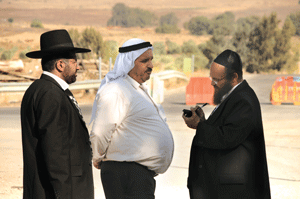
A long obstacle strewn path lined on both sides with barbed wire leads from Kfar Yuval passing through Kibbutz Dafna’s fruit orchards to Ghajar. Some of the region’s mountain peaks formerly the inheritance of the tribe of Naftali are now officially under Lebanese sovereignty which means they are unofficially under Hizbullah control. Lebanese army outposts and IDF bases face each other artillery at the ready. It is quiet but tense. Some say it is the lull before the storm.
This barbed wire path is accessible to just a few local Ghajar residents. It is the umbilical cord that connects them with their life source in Israel. Jeeps and other all-terrain vehicles pass us by carrying Ghajar residents to their steady jobs in Israel.
Ghajar sits on a strategic portion of the Golan Heights straddling both Syria and Lebanon which was annexed by Israel in 1981. Israel withdrew from the northern part of the village when it quit Lebanon in 2000 but re-occupied it in 2006 in the wake of the Second Lebanon War. It is a piece of land that the international community would like to see Israel “give back” as an expression of Israeli goodwill. Ghajar’s residents are Israeli citizens wary of givebacks that could place them under the iron will of Hizbullah terrorists who crouch at their doorstep and who view Ghajar’s barbed wire fence as the gateway to crossing the Israeli border.
When Prime Minister Netanyahu submitted plans to the UN last week for an Israeli withdrawal from the northern section of Ghajar that Lebanon claims as theirs it sent shudders through the village of approximately 2200 residents even though many political observers say Netanyahu has no intention of carrying through. There are elements in the Israeli government urging the withdrawal either because it would remove one Lebanese pretext for keeping up a state of war with Israel or perhaps because it might forestall concessions on other fronts.
Create a free account to keep reading.