Three decades have passed since Rav Yitzchok Hutner, ztz”l, left the world. Was he primarily a chassid, was he more intellectual or emotional, Maharalian or Gra, mussar or Ramchal? Those who merited a personal relationship with the author of Pachad Yitzchok and founder of Mesivta Chaim Berlin attest that he was the embodiment of extraordinary. Rabbi Yaakov Feitman, one privileged talmid, shares his own recollections of the Rosh Yeshivah who revitalized the study of hashkafah and left a unique legacy.
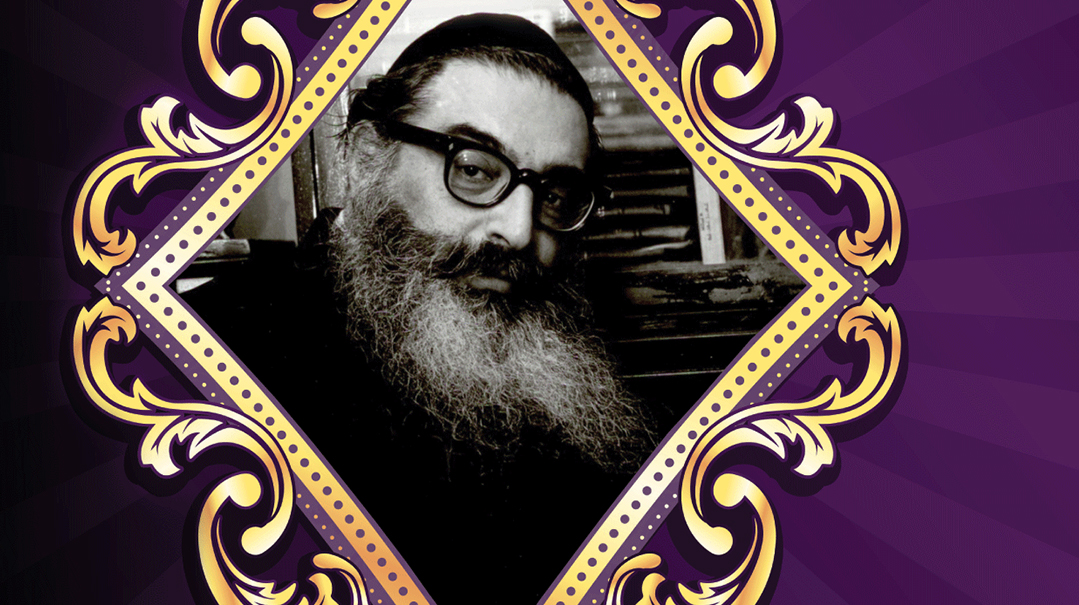
Chazal tell us that a person does not begin to understand his rebbi until forty years have passed (Avodah Zarah 5b; see Rashi, Devarim 29:6). But thirty years is sufficient for what his son-in-law and revered successor, Rav Yonasan David, shlita, currently rosh yeshivah, refers to as “the yearnings” for Rav Yitzchok Hutner’s guidance, Torah, and radiance (see introduction to Pachad Yitzchok, Igros). The following appreciation is neither definitive nor conclusive. It is simply one talmid’s yearning for a rebbi who uplifted his generation, rejuvenated the study of hashkafah, defined world events and cosmic issues from a Torah perspective, while never losing sight of the individual’s needs, concerns, and private battles.
Some of the stories are my own experiences, others were shared by gedolei talmidav, his closest disciples. None are simply rumor or hearsay. He was skeptical of outlandish anecdotes, punctilious about the ones he himself related, and would not have been pleased with blind hagiography. However, in the past three decades, the Rosh Yeshivah’s influence has grown exponentially. Seforim, books, scholarly articles, and countless lectures have attempted to explicate the vast treasure he left behind in the multiple volumes of his magnum opus Pachad Yitzchok.
I once brought to his attention a translation of one of the maamorim (essays) in Pachad Yitzchok that appeared in a journal; the translator had made some hopeless mistakes and misunderstood Rav Hutner’s meaning. The Rosh Yeshivah laughed and bellowed, “Loz em leben — leave him alone. I am happy that people in his circles will be motivated to open a Pachad Yitzchok.”
The Rosh Yeshivah himself discovered the “mysterious” (his word) phenomenon that one sometimes gains more from a rebbi after he passes away. In a letter he wrote at the age of twenty-one to Rav Isaac Scher, ztz”l, he confesses that “ideas and concepts that he [the Alter of Slabodka] desperately tried to explain to me, but that I was unable to understand, suddenly were clarified to me with his passing. The righteous are greater in death than in life” (Pachad Yitzchok, hereafter PY, Igros, page 251 and 253).
Create a free account to keep reading.