or Facts on the Ground?,As one quote says, “The Internet is like a giant jellyfish. You can’t step on it. You can’t go around it. You’ve got to get through it.“ But, as is true of so much on the Internet, its source is unverified. And therein lies much, but not nearly all, of the problem.
 When making airline reservations over the phone many of us might imagine that we are speaking to the typical uniformed representative firmly rooted to his or her headset and computer in a room pulsing with activity. It may come as a surprise then to find that some of our agents might be wearing exercise clothes while stationed comfortably in their home offices with the smell of supper wafting throughout the room.
In his book The World is Flat Thomas L. Friedman introduces us to Dolly the JetBlue agent who gave him a brief insight into her career. Like other home reservationists in Salt Lake City she works around twenty-five hours per week handling reservations for JetBlue Airways. Dolly’s good fortune came when JetBlue “homesourced” its entire reservation system to housewives in Utah. Just a short time ago such an endeavor would have been impossible. Today thousands of businesses and services benefit from people like Dolly who are based at their home computer (including the magazine in your hands). Ready or not there is a technological liberation that is happening all around us thanks to the growing power of microchips. People allow electronics to take care of timing the egg navigating the car and playing the stock market. Friedman points out that “Global collaboration and competition … has now been made cheaper easier and more productive for more people from more corners of the earth than at any time in the history of the world.”
Computers e-mail instant messaging cell phones and BlackBerry devices have played their roles in this outcome. Many users find that they no longer need their telephone landlines and are even removing the mailboxes from their front lawns. Our world has quickly evolved into a place where hooking up to the steady stream of technological advancements is no longer optional. The question “How will this new technology enhance my life?” has become “How should I fit my life into this new technology?” And with the Internet running freely through each innovation understanding these new technologies is more important than ever.
An Electric Saw in the Living Room
When television first entered America’s homes in the 1920s it was seen by most as a harmless medium of information and entertainment. The censorship of that era and those that followed reflected moral standards so it was not unthinkable to find a television in a heimishe home. As the years progressed however television came to reflect the gradual decay of society’s morals. By March of 1975 the trepidation of our gedolim concerning the harmful effects of television was obvious.
In his book To Kindle a Soul Rabbi Leib Kelemen author and senior lecturer mentions an advisory warning that was issued at that time by Rabbi Elazar Menachem Mann Shach Rabbi Yaakov Yisrael Kanievsky Rabbi Moshe Feinstein and Rabbi Yaakov Kamenetsky zichronam livrachah regarding the potentially harmful effects of television. Their basis was entirely related to Torah sources. Still it warned about psychological and developmental dangers. Rabbi Kelemen points out that in the same year secular research on the effects of television viewing was just beginning. Only a few years later thousands of similar studies had produced the same results. Today an entire network of information exists that confirm all of these findings and prove the adverse affects of television.
Over the years many people have opted to throw out their television or bar it from their home. This decision is usually influenced by the fact that most of the current TV programming contains clearly objectionable content that reflects the moral decay of our society. The precautions of keeping such content out of our homes and lives have worked … until now.
As you read these lines technicians are at work to discover more ways to pump television into our lives via the Internet. That’s because TV itself is losing its audience. Currently the television market is looking to our computers cell phones and even handheld games as vehicles for easy access to its programming. The hope is that this availability will help rejuvenate the current viewing slump.
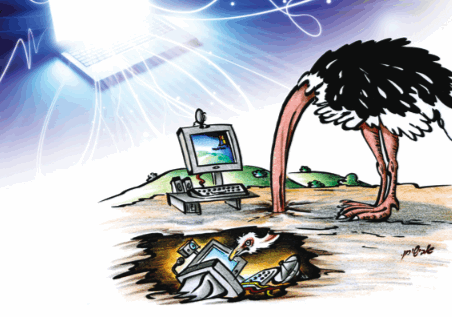
Those who think they’re doing everything they should when they eliminate a television from their home are clearly not doing enough. The tables have turned and in our modern times the television itself is almost the least of our problems.
Enter the computer which has become just as important as the light bulb in millions of homes around the globe. While television and computers both share the potential for entertainment computers with Internet capability have become integral components of the business world and the home environment. And as Rabbi Kelemen points out they must be respected.
“A computer is not a toy ” he says. “It is a tool like an electric saw. A blanket ban on home computers is as foolish as a blanket ban on electric saws. But it is just as foolish to leave an electric saw plugged in out in your living room where there are children. Chinuch is all about teaching our children how to use life’s tools. We must know when to teach our children to use each of life’s tools and how to teach them. That requires daas Torah.”
A prominent rabbi and thinker consulted by Mishpacha feels that “there is no force stopping the Internet from being global — it is far too useful a device. It is one of the greatest discoveries in the history of mankind. Although there are those in klal Yisrael who think that they will be able to keep the Internet out of their homes and lives they must realize that it will never go away. A person must learn to adapt. The way to win the war of the Internet is not getting rid of the Internet itself. How can we?”
He goes on to state that “The initiative to ban the Internet outright is crumbling because people are beginning to understand how incredibly useful it is. The Internet can be compared to a light bulb. While light bulbs have infinite positive uses the light they provide can also make it easier for a thief to steal. Is that potential robbery enough of a reason to outlaw the light bulb?”
According to this rav the mass rallies against Internet usage in the Jewish home won’t stop the trend. Nor should that be their aim he feels. “The importance of asifos [mass gatherings] is to declare the Torah stance on the Internet. Once our gedolim can make people aware that the Internet is extremely dangerous then the Jewish people must figure out how to save themselves. The ultimate solution cannot be complete non-use of the Internet. This may work in this generation but it won’t work in the next. The only solution will come when we learn how to adapt to it while protecting ourselves and our families.”
The Dangers
The most blatantly obvious problem of the Internet is that it is a potent device for the conveyance of tumah impurity. With one click the doors to Gehinnom can be opened wide to any Internet user.
Yet instant access to horrific impurity is far from the only Internet hazard. Many Internet users are guilty of considerable bitul zman wasting time. Hours can be wasted chasing links across the web. Even the most efficient filtering process won’t remove the addictive element of the Internet. According to a prominent rav any truly effective solutions to Internet hazards must address the addictive potential of the Internet.
In addition he points out that the Internet’s capacity as an instant conveyor of information also poses many problems. “Because this information is transmitted without being regulated anyone has the ability to write whatever he wants. Information can look very real and true and it takes a discerning eye to understand the fine lines between fact fiction opinion interpretation and manipulation.”
Another major problem is the Internet’s capacity to engage a Jew in the terrible transgression of lashon hara forbidden speech or in this case forbidden communication. “The Internet may be considered the greatest tool the yetzer hara has ever known in terms of lashon hara ” he says. “It bears remembering that there are many things a person is not allowed to say in an open forum. And the problem lies not only with the one who is conveying the message. The Chofetz Chaim also tells us that even if the information is permitted to be relayed the listener is not allowed to believe it.”
Just as the Internet can disseminate a world of Torah it can also be the vehicle allowing someone to speak lashon hara to millions. And if the readers believe the information to be true that communication can incur a myriad of further transgressions.
Another problem is use of the Internet in Internet cafes. The magnetism of these cafes has become so strong that seemingly observant Jews have been sighted visiting them on Shabbos. The popularity of Internet cafes is global. This means that when our youth spend their year learning in Israel they might access the Internet from these cafes. Frequently the Internet cafes are used to download and view TV shows update Facebook pages and check e-mail. Additionally some bochurim bring laptop computers to Israel which they use to record notes of shiurim. These and other devices can provide access to the Internet and all of its dangers.
When parents utilize a local number (popularly termed a “DSL line”) to dial their child in Israel that means that their child’s residence in Israel has a broadband Internet connection. Everyone is happy that the phone calls are free yet with a DSL line all that is needed is one bochur to hook up his laptop computer and the gates to the Internet swing wide open. Imagine the potential scenario of learning all day and then returning to an apartment with an unfiltered internet connection.
Extending the Classroom Walls
Despite the many dangers of Internet usage the computer is often touted as a valuable education medium. Indeed Dovid Weinstein head engineer of computer and telephony integration at Communication Data and Security in Spring Valley New York points out that the Internet and computers are powerful learning tools. Some schools are even providing computer training for young children — with the proper precautions of course. “In order for children to use the computer as an educational tool proper filtering and monitoring must be in place. And though it’s not perfect efforts are being made to make it much better. There is a huge market demanding a safe environment so that children can surf the Internet without being exposed to unwanted material.”
Some educators enjoy the fact that students have electronic communication. In public schools students are using laptops with Internet access as part of their curriculum. According to some teachers this extends the classroom walls and promotes active student learning because students must do something with technology. They also claim that e-mail and electronic conferencing promote conversation and even have the potential to improve literacy. But as Rabbi Leib Keleman points out: “I have yet to see a child who only had access to seforim who was deprived of access to computers and who suffered educationally as a result. There are no studies demonstrating any instances of ‘depressed IQ as a result of computer-deprivation.’”
Most universities and colleges offer online courses where credits for a degree are obtained in the privacy of one’s own home (although some courses might require fieldwork and internships). This is a desirable option for anyone wishing to avoid the harmful influences prevalent on most university campuses.
Rivka* gained experience with the Internet when she used it to put herself through graduate school — all from the comfort of her living room. “The whole research experience using the Internet is so much easier than going to the campus library and wading through hundreds of books that only give you a finite amount of information ” she attests.
Another learning opportunity is provided through Skype which allows people to talk to each other for free through voice or text from anywhere around the world. Along with webcams these technologies have enhanced Torah throughout the world enabling long-distance classes and chavrusos study partners. However such technology must also be used with caution. In some cases they have been blamed for promoting the “stranger danger” element of the Internet which has allowed for risky and even dangerous relationships.
Create a free account to keep reading.