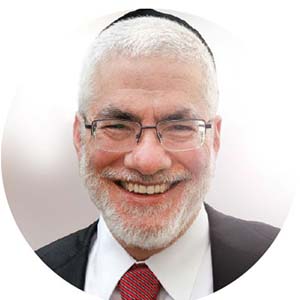
A few months ago Rabbi Shneur Aisenstark one of the most veteran and respected educators in North America(as well as someone from whom I have gained much) published a Guestlines piece entitled “Unconditional Love Has Its Limits ” which predictably generated a good deal of buzz. I return to that piece now in light of a pamphlet on the subject of parenting disenchanted teenagers by Rabbi Uri Zohar Israel’s most famous baal teshuvah and a highly respected talmid chacham.
Rabbi Aisenstark’s goal in writing seems to have been to empower parents to actually parent — to offer guidance and set limits — in an era in which many are so terrified of losing their children that they make that result more likely by giving in to every demand and succumbing to every pouty look. The Mishpacha cover highlighting Rabbi Aisenstark’s piece read: “Do We Love Our Children More than We Love Hashem?” That eye-catching blurb was presumably based on the well-known story — cited by Rabbi Aisenstark — of the father of Rabbis Shimon Mordechai and Moshe Schwab who banged his hand down at the Seder table at mention of the Evil Son and proclaimed “I love all of my children very much. You must all know however that I love Hashem much more.” He made clear that any son who became a rasha would be no longer be welcome in the family home.
The question as posed by the Mishpacha cover however presents a false dichotomy. Rarely is the choice for a parent between one’s struggling child and Hashem. Both Hashem and the parent share the same goal — that the child return to a vibrant and close relationship with Hashem. The only question is what course of parental action offers the greatest likelihood of achieving that goal.
To present the choice as one between a struggling child and Hashem is not only wrong it is dangerous. For the parent may decide that showing his love and fealty to Hashem requires him to constantly point out to his child every way in which he falls short in his mitzvah observance — not to mention of familial expectations of dress and external appearance.
Create a free account to keep reading.