THE CURRENT → A FEW MINUTES WITH Issue 951 · February 28, 2023

A Few Minutes with Rep. Mike Lawler (R-NY)

“Politics ain’t beanbags— it’s rough and tumble”
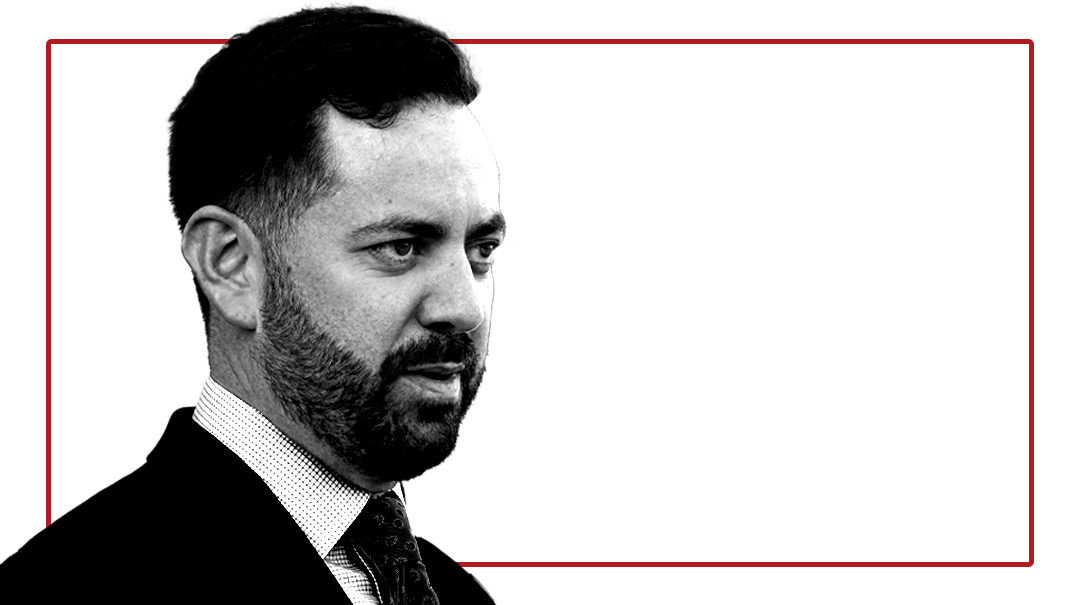
A Few Minutes with Rep. Mike Lawler (R-NY)
Photo: AP Images
It’s not exactly a “Jewish district,” but some 90,000 residents of New York’s 17th Congressional District — about 12 percent — are members of the Tribe. The newly redrawn 17th District abuts the New Jersey border and includes the predominantly Orthodox communities of Monsey, Kiryas Joel, and New Square.
In the November midterms, Republican challenger Mike Lawler unseated incumbent Congressman Sean Maloney by 3,250 votes, despite the district’s solid Democratic majority. Prior to that, Lawler, 36, had served two years in the New York State Assembly, where he successfully sponsored bills to provide additional funding for law enforcement and education, and tax relief for middle-income families, while also building relationships with leaders and rank-and-file members of Rockland County’s Orthodox Jewish community.
An outspoken supporter of Israel, and champion of school choice, Lawler is a member of the House Committees on Foreign Affairs and Financial Services. This interview, which appears in full on Mishpacha’s Power Politics podcast, has been lightly edited for brevity and clarity.


Your election was a close one. I won’t use the word “upset” to describe your victory, because when candidates win, they don’t consider it an upset. They had a plan to win. What do you think drove voter turnout in your favor?

Number one, a big part of it was redistricting. We got a fair set of maps in New York that made these districts competitive.

Number two, this was the first time in our nation’s history that Democrats controlled everything in Washington, Albany, and New York City at the same time, and they created a mess. The 40-year record high on inflation, surging crime, skyrocketing energy prices, a southern border with a massive inflow of illegal immigrants who brought drugs pouring into our communities, killing Americans, and then international crises that we were dealing with, from the Russian invasion into Ukraine, and China. Voters across the district wanted to restore balance and common sense at every level of government and ensure that their voices were heard.

Finally, and this may be most important, I’m a lifelong resident of the district. I was traveling around the district doing six, seven, or eight events a day while Sean Maloney [his incumbent opponent] was gallivanting across the globe in his role as DCCC [Democratic Congressional Campaign Committee] chair. People saw that and appreciated how hard we worked, and in the end, we won.

Even without the burning issues you mentioned that were bothering people, you have a good track record at drawing cross-over votes in a predominantly Democratic district, even though you’re a Republican. That’s going to be very important going forward nationally. What can you share from your experience that can help other Republicans nationwide who need Democratic votes to win?

My congressional district has 70,000 more Democrats than Republicans. The way that I have approached campaigning, and governing, is to focus on the issues that cut across party lines. People are focused on a few basic issues. People want good-paying jobs to provide for their families, quality education for their children, and access to housing and health care, and they want to live in safe neighborhoods. That was the message we carried forward in every community we went to. And I didn’t shy away from areas where Republicans haven’t fared as well in past elections. Nineteen percent of the district is Latino. It has large Jewish, Irish, and Haitian communities.

Continue reading with Mishpacha.

Create a free account to keep reading.

Everything you need to stay close to Mishpacha.
← Previous installment What Republicans Want from a Candidate Next installment → Are You Too Old to Be President?