Imagine a classroom without desks. Imagine teachers who don’t rely on textbooks. Imagine students who choose what and when they want to learn. This is the popular Montessori educational approach — and it may be coming to a frum school near you
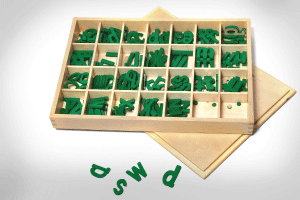
It’s 9 a.m. Four-year-old Bentzion hangs his coat in his cubby exchanges outdoor shoes for indoor shoes and steps into the classroom. If he wishes and he usually does he runs to Morah Miriam for a good morning hug. From there he marches over to a shelf to choose a “work” (a set of manipulative materials designed to teach a particular skill). This morning he starts with a sand tray from the alef beis work area. He brings it to a table pulls out a chair and then slowly traces an alef in the sand tray with his fingers.
Sitting beside him is three-year-old Levi with a project from the practical life corner. It contains a glass bottle filled with blue liquid a large dropper and a smaller glass pitcher. Holding the dropper bulb in a three-finger grasp (preparation for gripping a pencil correctly) and squeezing it so the blue liquid is sucked into the tube Levi transfers the colored water to the glass pitcher.
Around the classroom children are busy with their individual “works.” Morah Miriam roves around the room; she is on call waiting to assist any child who needs help.
Bentzion now finished tracing the alef returns the sand tray to its proper place and approaches Morah Yocheved requesting an adding lesson. Together they walk to the math work area. Today they will be learning the number 4 500. First she holds up the number on a card.
Create a free account to keep reading.