The Kosel Hakatan, a segment of the Western Wall in the Muslim Quarter, is considered the point closest to the Kodesh Hakodoshim of the Beis Hamikdash
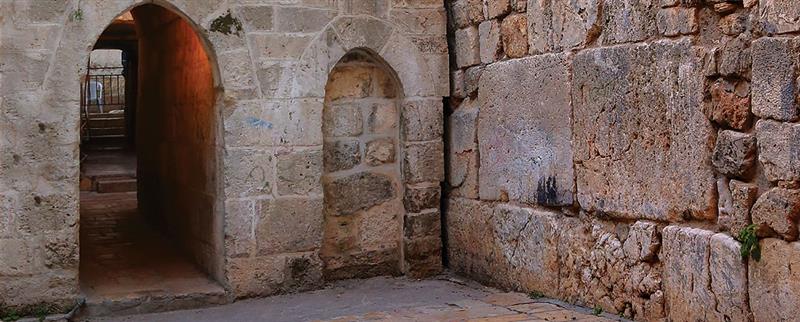
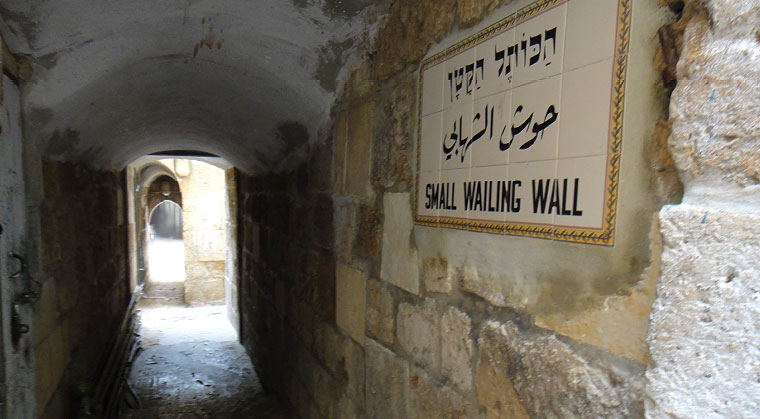
CLOSE QUARTERS “As far as the State of Israel is concerned the rediscovery of the Kosel Hakatan was an unplanned error. The government wants to maintain a clear separation between the Jewish Quarter and Kosel Plaza and the Muslim Quarter — where many Jews also lived in the past — and the concealed parts of the Kosel” (PHOTOS: Mishpacha archives GPO)
W hile Jews flock to the Kosel during these days of mourning the Beis Hamikdash many are unaware that the Western Wall of the Temple Mount is not just relegated to this Kosel Plaza whose stones absorb their tears. In fact the Wall extends hundreds of meters north buried within the Muslim Quarter — which begs the question: Where did the Wall disappear to and why don’t we daven along its entire length?
One reason is because of a little-known-yet landmark decision handed down five years ago by the Jerusalem Magistrate’s Court which ruled that police can forbid Jewish worshipers from blowing the shofar at the Kosel Hakatan a segment of the Western Wall which peeks out of structures in the Muslim Quarter yet which is actually considered to be the point of the Kosel directly opposite and closest to the Kodesh Hakodoshim of the Beis Hamikdash.
The 2012 ruling didn’t happen in a vacuum but was the final verdict in a drawn-out case from six years before regarding an incident on the second day of Rosh Hashanah in 2006. Jews who’d just finished davening at the Kosel noticed a young man in a tallis feet together and holding tightly onto a shofar being dragged by officers up the hill to the police station. The bochur 19-year-old Eliyahu Kleinman was part of a group who davened every Shabbos and Yom Tov at the Kosel Hakatan which is about 125 yards north of the Kosel Plaza near the Iron Gate entrance to the Temple Mount.
Create a free account to keep reading.