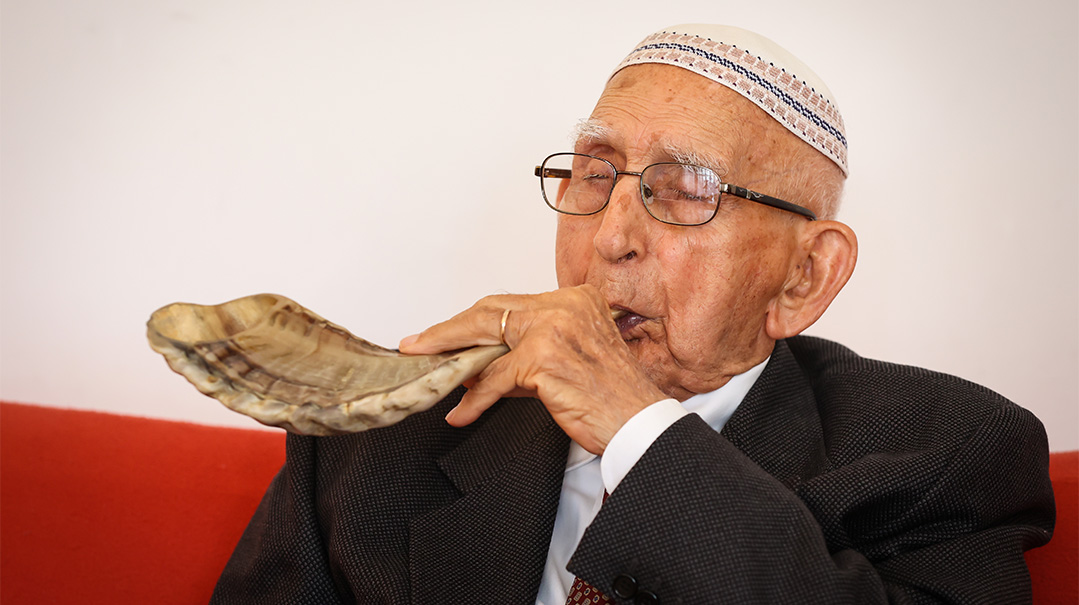
At 101, Yaakov Aharoni is the last surviving shofar blower of an era when sounding the shofar at the Western Wall meant almost certain incarceration by the British
IN the late 1920s, the local Arabs had begun rumbling about how blowing the shofar at the Western Wall was an insult to Islam, and by 1930, the legislative authority of the British Mandatory government stipulated that the Moslems’ ownership rights to the Temple Mount also encompassed the Kosel area (which at the time was just a few meters wide, pushing up against Arab houses). As a result, Jews were banned from blowing the shofar at the Wall, even on Rosh Hashanah and Yom Kippur.
The ban was an outrage, even to the most pacifist Jews of the Old Yishuv, and from the first Yom Kippur in 1930, when Lubavitcher chassid Rabbi Moshe Segal hid a shofar under his tallis and blew the tekiah gedolah, the shofar was actually blown every year until 1948, smuggled in by intrepid young men who would be beaten and arrested in the aftermath.
It was a real technical challenge as well, as large numbers of British policemen were stationed along the routes to the Kosel and conducted thorough searches of the Jews heading toward the Wall. The boys, who figured out creative ways to smuggle in the shofar, worked in teams of three so if one was caught, the others still had a chance — although it would usually mean spending at least a night, and up to six months, in the Kishleh, the Turkish-era police building and prison that’s still at the entrance to the Old City.
But that didn’t deter them. “This was about the lifeblood of the Jewish people,” says centenarian Yaakov “Sika” Aharoni, who blew the shofar at the Kosel in 1936 when he was 17.
Create a free account to keep reading.