While every other North African Jewish community has disintegrated, the Jews of Djerba are still a bastion of Torah on this island off the Tunisian mainland. Preserving ancient rituals and maintaining clandestine customs in a sea of revolution, they’ve remained an anomaly — and we were determined to learn their secret.
But as Shabbos approached in the Jewish community of Djerba, we found that they had another ways to herald its arrival: The kehillah hires someone to circulate in the Jewish Chara Kabira neighborhood to encourage shop owners to lock up, in addition to the original custom of blowing the shofar.
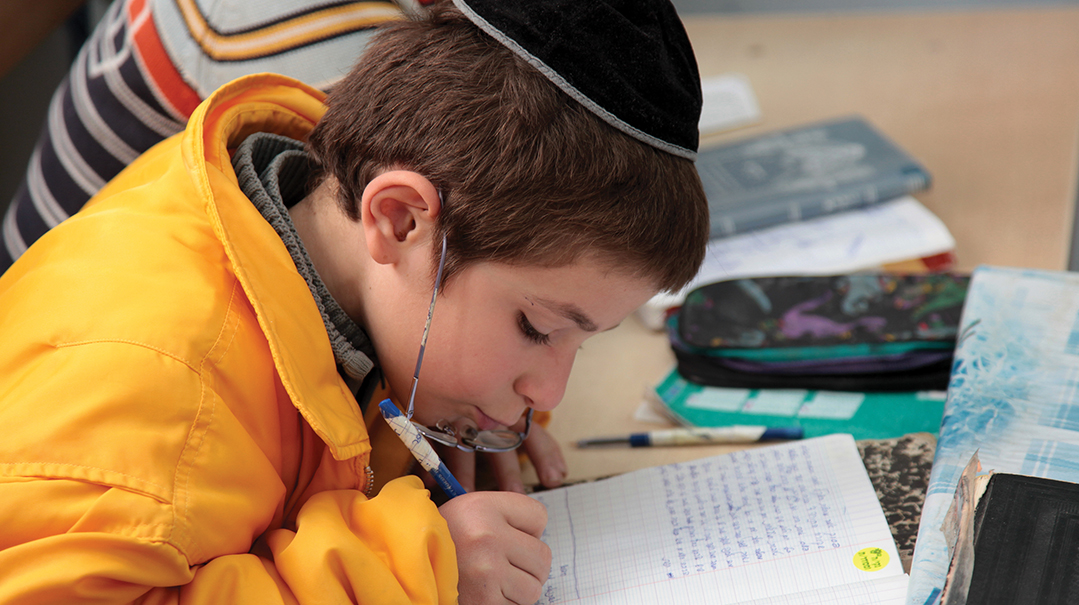
The Djerban community is proud of its adherence to the ancient rituals, tracing its 2,000-year sojourn on the island to a group of families of Kohanim exiled after the destruction of the Second Beis HaMikdash. While most of the hundreds of thousands of Tunisian and North African Jews have moved to Israel, France, and other countries over the last half century, the Jews of Djerba — all 1,300 of them shomrei Torah umitzvos — have stubbornly held onto their island community, secure in the government’s promise of protection and in the zechus of their unwavering commitment to halachah. Here the boys learn in yeshivah seven days a week until they secure a trade and marry, and chillul Shabbos is unheard of. Today the community — which makes up over half of Tunisian Jewry — is actually on the upswing, as many of the young families have chosen to stay.
And when Shabbos comes in, so does a feeling of old-world tranquility. Rav Chaim Biton, the community rav and official shofar blower, has been ushering in the holy day for the last 50 years. He was a teenager when the previous blower moved away, and has been blowing every Friday since. We arrived at the Rav’s house well before candlelighting: One of us took up a position in the “town square” from where the blowing can be heard, and the other accompanied Rav Biton and his shofar up to the roof. With the serious demeanor of a man who knows his community depends on him, he took his shofar, ascended to the roof, took up his position at one of the highest points in the town, and after frequently looking at his watch, at ten minutes to candle lighting proceeded to blow the first series of tekios. Having given it his all and looking a bit winded, he paced the roof for the next ten minutes and — having regathered his strength — then again took up his position and, as has been done for many hundreds of years, blew the shofar to let his community know that it was once again time to usher in the holy Shabbos.
But we weren’t prepared for what happened next. We quickly stowed away our cameras and rushed off to shul. And sat and waited in a near-empty room. Finally a young man came in and explained to us that most of the shuls wait an hour after candlelighting before davening Kabbalas Shabbos. In the interim though, he gave us a tour of most of the shuls of the Jewish quarter. In one shul there were about 20 young boys chanting Shir Hashirim. We passed by the Jewish school and heard singing, but our guide smiled shyly and explained that he couldn’t go inside. Looking through the window, we saw why: teenage madrichot were leading young girls in the Friday night davening.
Create a free account to keep reading.