Would the Chasam Sofer’s grave be demolished along with the ancient cemetery?
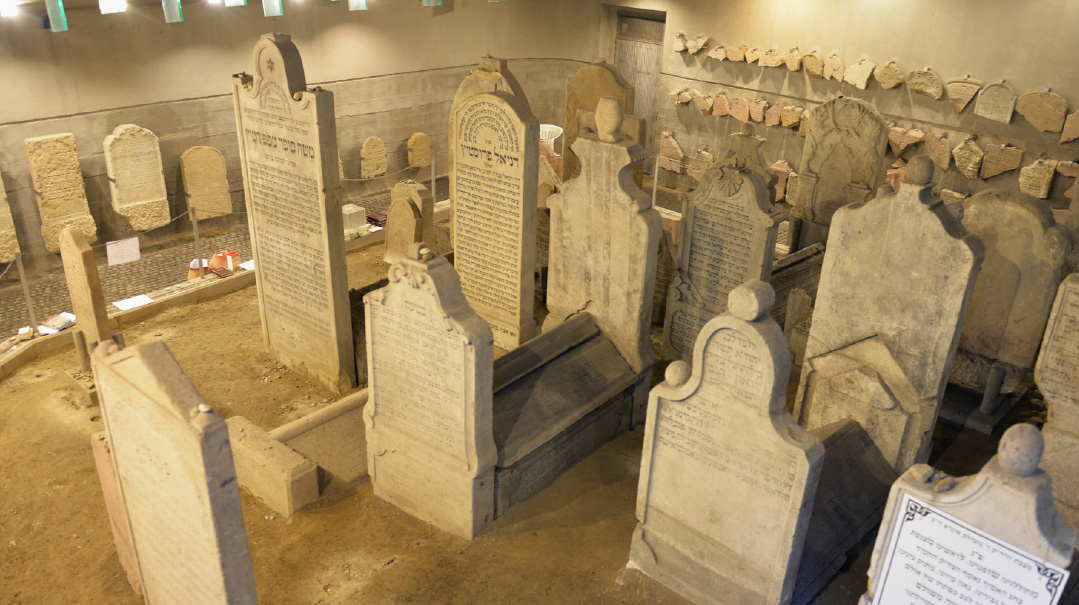
The busloads of Yidden who arrived at the kever of the Chasam Sofer in Bratislava,
Slovakia, for the Pressburg gadol’s 185th yahrtzeit this past Sunday, 25 Tishrei, made their way down through a modern, architecturally intriguing opening on the hilly banks of the Danube River into a spacious, comfortable subterranean compound equipped with siddurim and seating and all the amenities for a comfortable stay of tefillah.
Yet as they descended the stairs, many of the younger ones, at least, had no idea that today’s easy access off the main road belies a decades-long struggle for the kever’s survival, beginning with the Nazi takeover of Slovakia in World War II, when the graves of the Chasam Sofer and another 23 Pressburg rabbanim were slated for destruction together with the rest of the ancient graveyard. This renovated underground mausoleum — today frequented by the multitude of descendants and disciples of Rav Moshe Sofer zy”a — is the sole remaining part of the centuries-old Jewish cemetery that almost wasn’t.
Bratislava — formerly known as Pressburg — was always a city of great strategic importance, because the Danube River — which begins in Germany and crosses through Austria, Slovakia, Hungary, Croatia, Serbia, Bulgaria, Romania, Moldova, and Ukraine — bisects the city lengthwise on the river’s way to the Black Sea.
Create a free account to keep reading.