On Tu B’Shevat, the entire landscape is in bloom after the rains
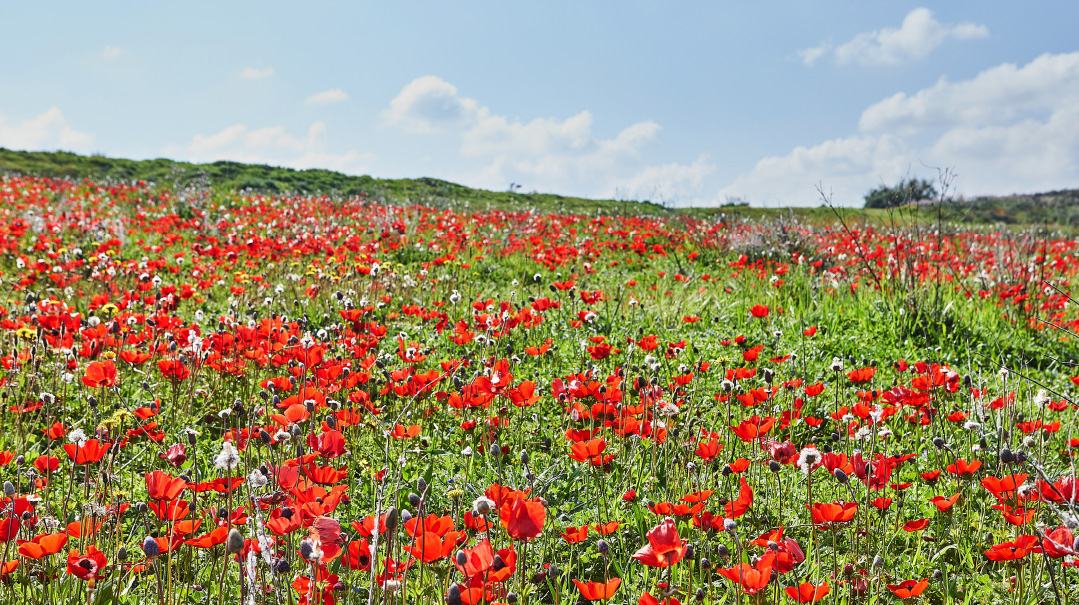
Cool winds blow gently across the landscape, wildflowers splash color across the fields, and white almond blossoms — always the first trees to flower and without fail on the week of Tu B’Shevat — signal the Tu B’Shevat season, prompting hikers and stay-at-homes alike to hum “Hashkeidiah Porachat” almost without realizing it.
But this year, the rains that Jews in Eretz Yisrael have been davening for arrived in abundance and don’t seem to be letting up yet. While we rejoice in the gishmei brachah, that rain can turn a scenic trail into a muddy mess.
So what’s a nature lover to do? On a rainy day, one idea is to skip the soggy paths and head instead to the National Library (NLI) in Jerusalem for its current exhibit, “There Are Flowers in the Library,” which explores the cultural and historical meaning of Israel’s floral landscape. While nothing can replace a brisk walk through nature as soon as the skies clear and the ground dries, leafing through NLI’s books and artifacts offers a different kind of blooming experience.
Tu B’Shevat as the holiday of trees is sourced in Maseches Rosh Hashanah: The 15th day of Shevat is a halachic date tied to the agricultural mitzvos. When the Jews still lived and planted in Eretz Yisrael, questions about when to date the beginning of an agricultural year for matters like maasros and shemittah were relevant in a practical, day-to-day way. Yet after the Churban, most of the Jews were exiled from the Land and therefore couldn’t keep mitzvos connected to it — the mitzvos tluyos b’aretz.
Create a free account to keep reading.