A hilltop network of ancient mikvaos is unearthed in Ramat Beit Shemesh
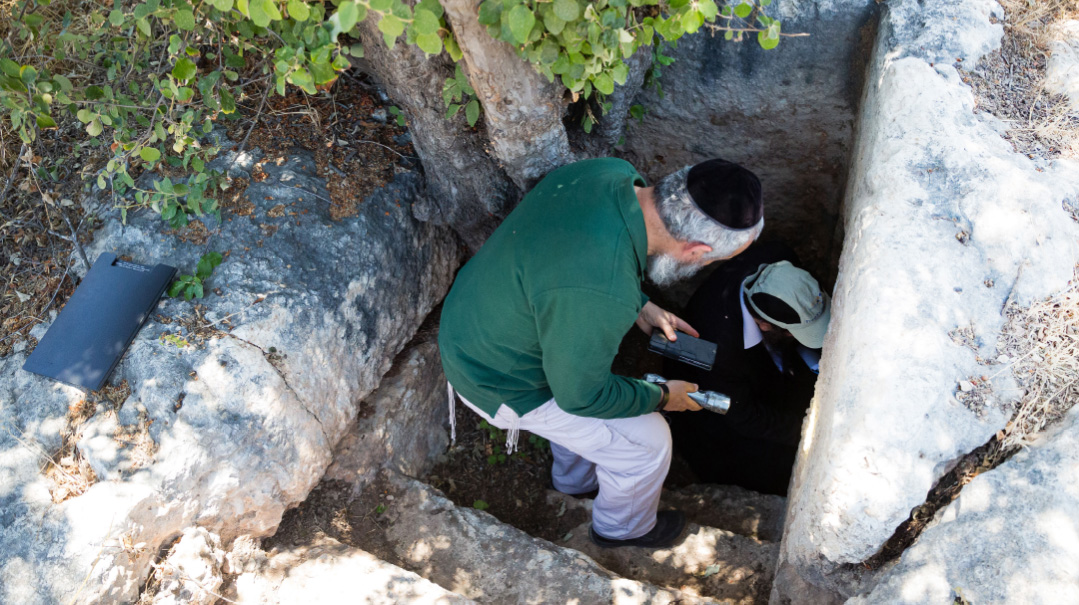
And now, residents of the new neighborhood of Ramat Beit Shemesh Gimmel (part of a network of the ever-expanding city whose ancient roots go all the way back to the era of the Shoftim) can greet history right outside their door: All they have to do is cross the traffic circle intersection of Eliyahu Hanavi and Yeshayahu Hanavi Streets, and they’ll find themselves in a time warp. Because right at the edge of those new buildings is an open field that has become a recent treasure of the archaeology community — an entire hill filled with ancient mikvaos.
We’re accompanying Reb Nissan Levron, who has become a familiar figure on this hill. Reb Nissan, a longtime resident of the Jerusalem suburb of Beitar, is an editor of Jewish texts, a researcher, a writer for the Hidabroot kiruv organization, a natural health practitioner, and a tour guide specializing in biblical archaeology and Jewish history excursions off the beaten track around Eretz Yisrael.
Standing on this hill, called Givat Hamikvaot (“Mikveh Hill”), Reb Nissan points out the surrounding historical attractions not far from where we are: the Elah Valley and the ancient cities of Azekah and Socho on either side, where the iconic battle of David and Goliyas took place; the ruins of Churbat Etri, a former city from the time of the Second Beis Hamikdash, and the ancient King David–era city of Shaarayim with its two distinct gates.
But what interests him most is the very hill where we’re standing, a testament to halachic adherence and mesirus nefesh that prevailed among the remaining Jews of Eretz Yisrael even after the country was overrun by the Romans and so many residents assimilated to the side of Roman culture.
Create a free account to keep reading.