Professor Reuven Feuerstein z”l dedicated his life to healing and change, teaching that the brain — and the spirit — are limitless, no matter what mental baggage a person has been saddled with. A month after his passing, his legacy endures.
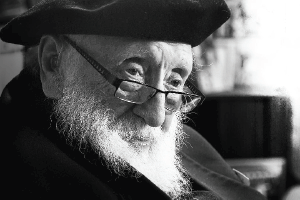
The small living room in the modest apartment on Basel Street in Jerusalem’s Kiryat Moshe neighborhood looked like it would burst if one more person entered. But like the heart of its owner — Professor Reuven Feuerstein z”l — it seemed to be ever-expandable as the stream of visitors kept pouring in to pay their respects to the man who so profoundly changed their lives.
Parents of high-achieving children with learning disabilities who were written off as permanent failures, the mother of a hopelessly autistic boy who began to talk in coherent sentences, a gainfully employed Downs syndrome young adult who was once advised to be institutionalized, an elderly man whose future would have been doomed had the professor not smoothed out his aliyah in the 1950s — all told their stories during the recent shivah of the visionary who changed the way the world looks at intelligence and cognition, and who showed how even the weakest people can shine.
“Human beings,” Professor Feuerstein told me in a wide-ranging interview several years ago, “have the unique characteristic of being able to modify themselves no matter how they’ve started out. A person can overcome even inborn barriers and traumas.” And indeed, Professor Feuerstein — who passed away last month at 93 — proved thousands of times over that although special children need more input than others, even those classified as hopeless can reach surprising levels of achievement.
For more than half a century, and in over 80 countries, Professor Feuerstein’s theories and applied systems have been implemented in both clinical and classroom settings, and his theory on the malleability of intelligence has led to over 2,000 research studies. In simple terms, it means figuring out what in the brain is blocking a child (or an adult) from learning, and looking for a pathway, a way to explain things so that the brain begins to open and understand.
Create a free account to keep reading.