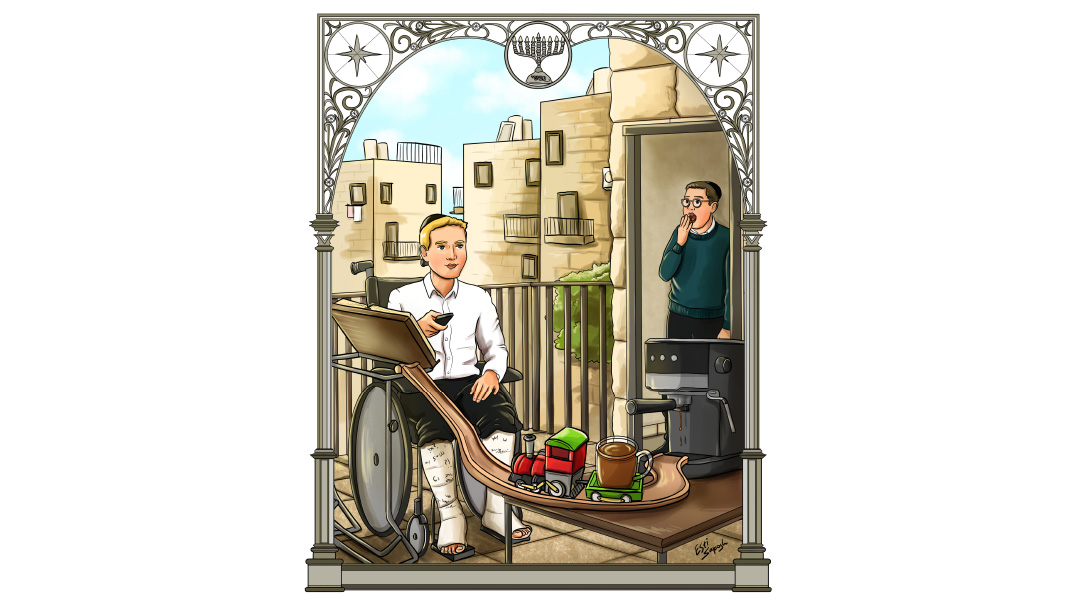
“This year, I want to talk about second chances, moving on, rising above adversity, getting back up… all of that stuff, it’s so important"
M
 usic should be discussed in a place with a musical vibe, Shuey thought. In the old days, they would sit in the back room of the studio, empty pizza boxes and soda bottles all around them, creating and planning and dreaming.
Then they had moved their sessions over to that room in Shuey’s old house, sort of a closed-in porch with glass walls and plants all over and good energy. The crew would often still be there when the sun came up, the glass walls painted orange as new music came into the world.
It felt strange to welcome Raffi Katz, who had been part of those gatherings, to the study of a rented house, a lackluster room with a single dark seforim shelf, shaggy beige carpeting, and a needlepoint of the Kosel on the wall that looked like it was made by someone who had run out of steam halfway through. The room had no energy, but Raffi seemed eager to talk.
Raffi looked good. He had gone from a sound-equipment shlepper to a technician, then he’d opened the studios and had somehow become a broker, matching up singers and songs, musicians and gigs. Now he was a producer, and, in a magazine article that made Shuey wince, he had been called a “visionary.”
This one’s in print. Some of our best stories live in the magazine — subscribe to get Mishpacha every week.