One person who did not get the message of preserving social unity is High Court President Esther Hayut

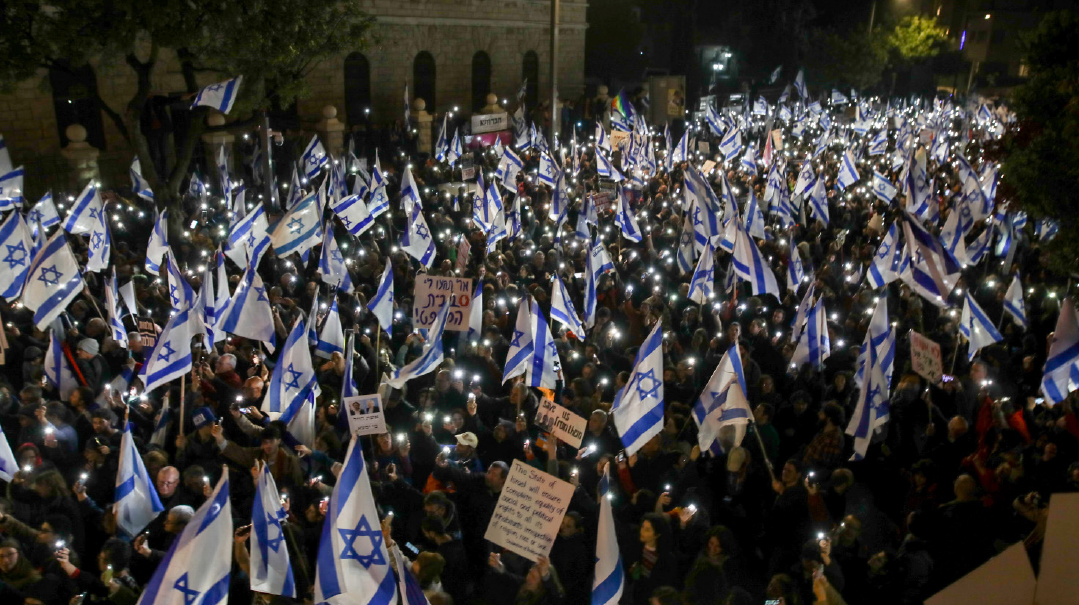
After the defeat of Hamas and the return of the hostages, the most fervent wish of Israelis since October 7 has been that we not return to the bitter divisions of the ten months that came before. Two weeks ago, I arranged a meeting between a leading proponent of the judicial reforms and someone who was active in the opposition. Both are religious, highly intelligent, and very impressive in every respect.
In the course of the meeting, that anti-reform activist — who in the wake of the Hamas attack immediately joined with other high-tech experts to help with the logistics of getting needed supplies to soldiers and using AI to locate both hostages and those murdered — predicted that the pre-October 7 demonstrations will not return when the war is over: “Perhaps the Balfouristim [those from Tel Aviv’s Balfour Street], for whom Motzaei Shabbos demonstrations against the government are a secular Melaveh Malkah, will return. But the massive crowds that filled Kaplan Street will not. After you have lived in the same tank with someone for months in Gaza, the desire to demonstrate against them is lost.”
Let’s hope he’s right.
But one person who did not get the message of preserving social unity is High Court President Esther Hayut. Just eight days prior to her retirement from judicial service, the Court she headed struck down an amendment to Basic Law: The Judiciary passed by the Knesset that forbade the High Court from using “unreasonableness” as grounds for overruling government actions. The vote was eight justices to seven.
In the midst of Israel’s longest war since the War of Independence, Hayut chose to lob an incendiary bomb and finalize the naked power grab that began with former High Court president Aharon Barak’s declaration of a constitutional revolution on the basis of two Basic Laws passed in 1992, each with less than half of the Knesset members voting and neither commanding the support of even one-third of the Knesset members.
Create a free account to keep reading.