An unforgettable lesson about the seriousness of Jewish music and what its ultimate purpose is
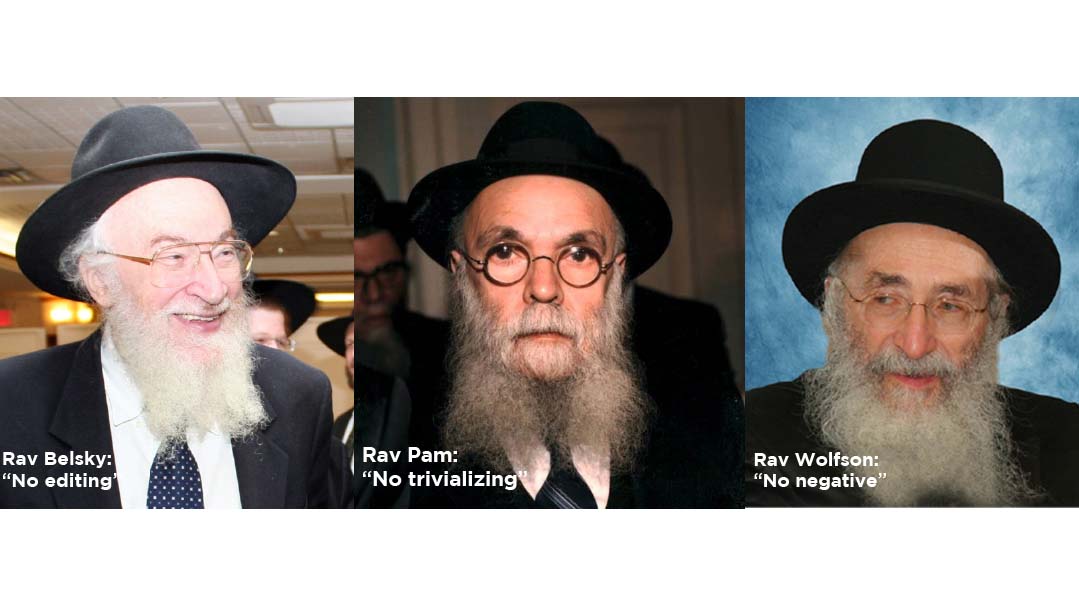
Rabbi Yosef Chaim Golding, cofounder of JEP, recalls that once, a question arose regarding fitting words of a pasuk into a tune. “Rabbi Belsky was adamant that we not ‘edit’ any pasuk by omitting or doubling a word,” he says. “We had a lot more flexibility when it came to choral harmony, though.”
The JEP concept of inserting inspiring English lyrics into existing Jewish songs was generally successful, but occasionally the directors wanted to include Hebrew songs too.
“While preparing the very first JEP record, Reach Out, Torah Vodaath Mashgiach RAV MOSHE WOLFSON wanted to make sure the songs featured positive, rather than negative or critical lyrics, and on the song ‘Hashem Hu Elokeinu,’ he changed the words ‘U’vshilton kakofrim ain anu ma’aminim — we do not believe in the heretical regime” to “U’vshilton yeshorim kain anu ma’aminim — we do believe in the leadership of the righteous.”
Rav Wolfson himself was no stranger to niggun. In fact, he wrote the words for the lively Modzhitzer niggun “V’hayah B’achris Hayamim/One Day When Mashiach Will Come” (JEP Volume 3, 1977), which was popular in Camp Torah Vodaath.
Create a free account to keep reading.