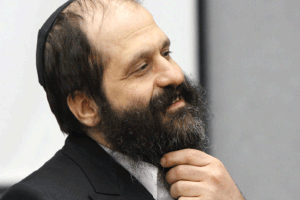
What has Sholom Mordechai Rubashkin been doing in prison for the last 1,400 days (with another 23 years to go)? How could it be that his eyes are brighter than ever, his emunah stronger than a rock? When there’s nothing outside, he says, you have to reach deep inward — and discover tools most people are fortunate not to have to use.
The dominant feature of the Otisville Correctional Institution landscape is the high gleaming electric fence enclosing the prison building.
Men circle the running track at its side but they are looking down rather
than ahead. Eventually I manage to correctly fill out the forms. Pockets are emptied: cell phone keys change papers and even my pen are left in a small locker as I am waved through the metal detector across a large courtyard and into the visitors’ room. Outside the heat is oppressive; in here a bit worse. The large fans provide more noise than relief. The guards ask who I’m here for and I am instructed to sit down and wait.
The scene all around is heartbreaking — families waiting on the hard plastic chairs rearrange their features into smiles as their visitors are led through the door from the “inside.”
Create a free account to keep reading.