The current Israeli legal system is almost entirely the creation of one man, Aharon Barak
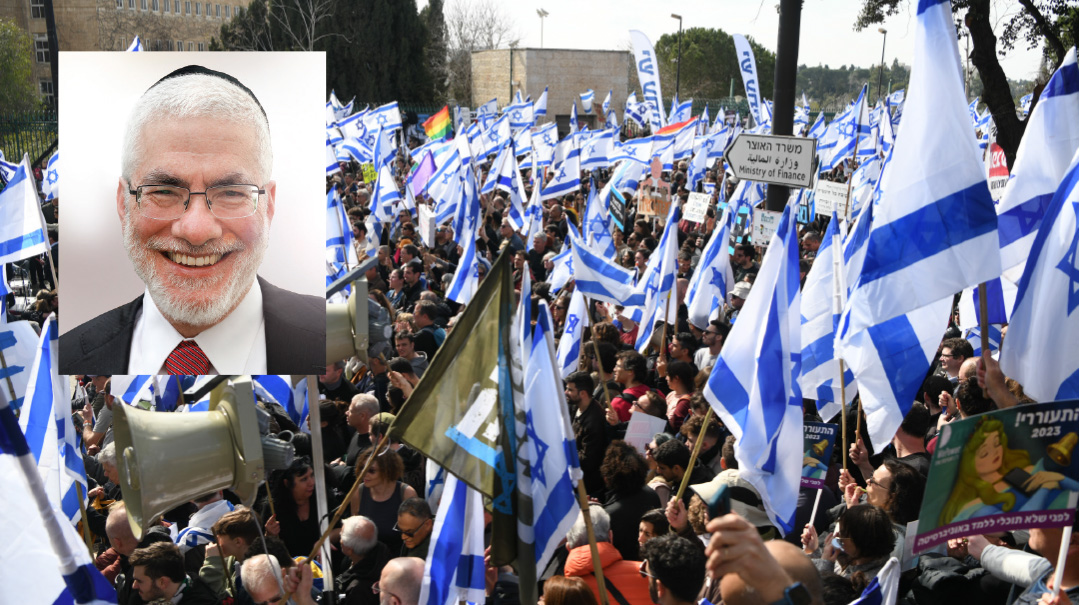
Iwould bet that not one in ten of those tens of thousands of Israelis who have taken to the streets in recent weeks to protest Justice Minister Yariv Levin’s proposed judicial reforms has the slightest clue as to the legal and jurisprudential issues involved. And that is even more true of foreign dignitaries, from President Biden to French president Emmanuel Macron, who have urged Prime Minister Binyamin Netanyahu to go slow on judicial reform.
No high court in the world has arrogated to itself anything like the power that the Israeli High Court claims. It functions as a super-ombudsman over the government, and at times as a super-legislature. Nearly thirty years ago, Maariv editor Shmuel Schnitzer wrote of the Court, “Elections have become a mere formality. Learned men of elevated principles have emptied democracy of any meaning.”
The “constitutional revolution” that Justice Aharon Barak declared in 1992, said former minister and Israel Prize laureate in law Amnon Rubenstein, caused Israel’s High Court to be viewed as the most activist supreme court in the world: “[I]n many respects, the High Court under Barak has become an alternate government.”
Rubenstein, incidentally, was a member of Meretz.
The High Court — usually in the form of three- or five-judge panels — exercises original jurisdiction over thousands of challenges to government actions per year. Those cases typically arrive on the High Court’s desk with no lower court proceedings or fact-finding. And that does not even include the many rulings of the attorney general, acting as the High Court’s eyes and ears in the government, to prevent government actions before they can even be challenged.
Create a free account to keep reading.