When the White House announced that it was accepting submissions for this year’s menorah, Mr. Heinemann pitched his own
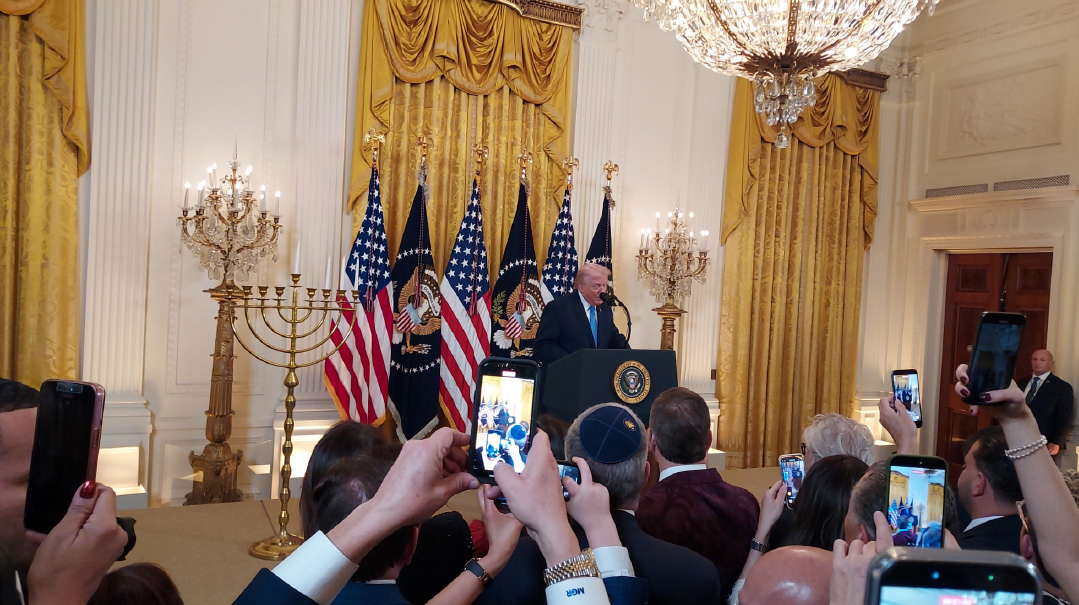
One menorah used by President Obama reflected a “coexistence theme,” while another eco-friendly one was made from sustainable and recyclable materials. President Biden opted for a historical bent, with a menorah made from wood salvaged from the last time the White House was renovated, topped by silver cups inspired by ones that Thomas Jefferson used in his personal residence. This year, the White House staff selected a menorah they were sure their boss would be proud to stand next to: Big, Beautiful, and Gold.
The menorah, whose high-brass finish lends it a warm, golden glow, especially in indoor lighting or on camera, retails for $1,400. It weighs in at an impressive 32 pounds, measures 63 inches in height and 31 inches in width, and has an interesting story of its own.
Mr. Henry (Naftoli) Heinemann, a retired electrical engineer who worked for the US Army and is now a mechaber seforim living in Lakewood, New Jersey, was born in England during World War II, just months after his parents fled Fürth, Germany in the aftermath of Kristallnacht. The family then relocated to Washington Heights, New York, where many German refugees settled. The Heinemanns became members of K’hal Adath Jeshurun (KAJ), led by Rav Joseph Breuer, as well as the Kehillas Yaakov shul, led by Rav Yehuda Breslauer, which kept minhagim of the Fürth kehillah. The Washington Heights community consciously preserved the rich minhagim and mesorah of prewar German Jewry, which emphasized dikduk and hiddur mitzvah. The massive, ornamental menorah that is lit in KAJ every day of Chanukah reflects these values.
When Mr. Heinemann eventually moved to Monsey, New York, he was taken aback at the menorahs that were used in many of the homes and shuls. They were functional perhaps, but were also small, and in Mr. Heinemann’s words “pathetic.” It was an affront to the hanhagah he was raised with, and he felt, disrespectful of pirsumei nisa in general.
Create a free account to keep reading.