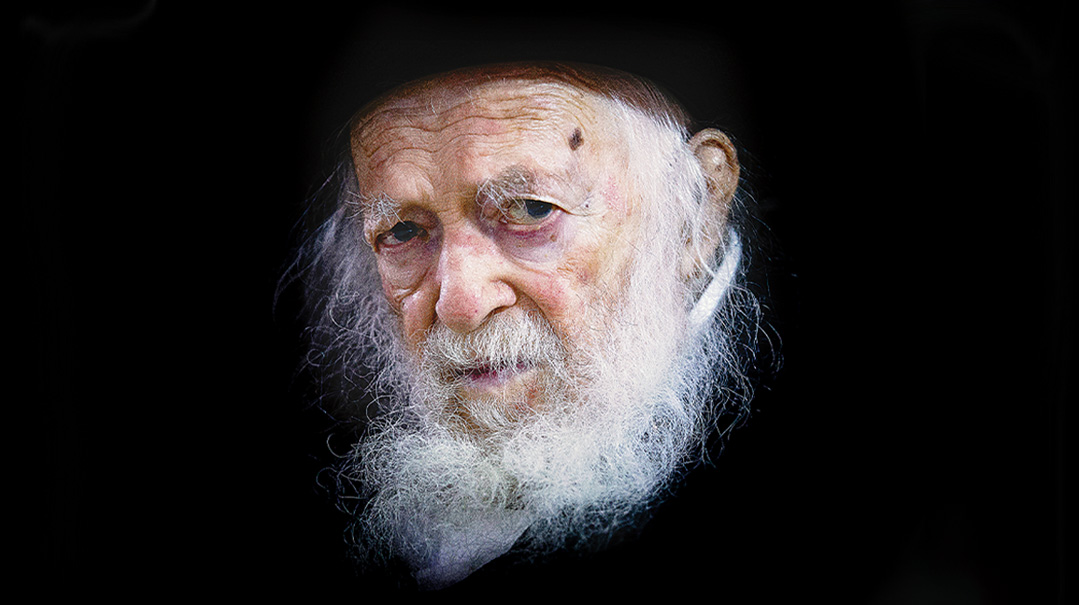
You’re angry. Humiliated. In pain. Your heart feels rage toward the one who hurt you so much. Is it really possible to turn it around to feel love for this fellow who will in turn reciprocate with his heart turned toward you?
After weeks of discussing how parents can bridge the seemingly insurmountable gaps between themselves and rebellious or otherwise difficult children many people have approached me for what they hope will be the secret of renewed family harmony. What should stricken humiliated angry parents do when they see their child straying from the path they’ve laid out for him or her?
The wisest of all men lets us in on his secret although if a parent still believes his child is his private property he might not be able to understand what Shlomo Hamelech is saying — remaining impervious to the amazing explanation that might extricate him from their troubles. But if these parents have internalized that their child is a trust deposited with them and that the Torah imposes duties on them toward their child then the way is open for them to apply this powerful formula.
A few years ago Mishpacha produced a supplement called Introspective in which I presented various mental exercises for self-training to improve our relationships with those around us. The last exercise of the set is a natural outgrowth of the previous exercise which dealt with judging others favorably giving the final push to create a veritable revolution in our personalities. This exercise is doubly important because it shows us how to wield the tremendous power source we already hold in our hands.
The pasuk says “As in water where a face reflects a face so is the heart of a man to a man” (Mishlei 27:19).
What is the meaning of this cryptic pasuk that makes it so relevant to our daily lives?
The Vilna Gaon in his commentary on Mishlei explains:
“As in water where a face reflects a face — like water that shows a person’s face as he shows himself to the water. If he twists his face the water will look that way too. So is the heart of a man to a man — if one’s heart is well-disposed toward another person that person will be well-disposed toward him even if he doesn’t know what is in the first person’s heart.”
I expect that the reader has already begun to get the idea. But before we delve into it more deeply let us examine what the Vilna Gaon says about another pasuk in Mishlei: “A quick-tempered man acts foolishly and a man of sinful plots is hated” (14:17).
The Gaon explains “…One who thinks evil thoughts in his heart and does not reveal them outwardly even though no one knows what is in his heart he will be hated for As in water where a face reflects a face…”
The idea is really the same just expressed from a negative angle. Yet the revelation that emerges from these words is one of enormous potential. To complete the picture let us now look at what the Ohr HaChaim says on our pasuk which he quotes many times in his commentary on the Torah. In parshas Vayigash where Yehudah confronts the disguised Yosef he writes:
“What he said to him may be explained in accordance with the verse As in water where a face reflects a face. Yehudah employed a strategy of inclining Yosef’s heart to be merciful toward him by bringing his own mind and will to a place of love and fondness so that Yosef’s mind should come close to him to accept his conciliatory words. Yehudah needed to implement this strategy because it wasn’t natural for Bnei Yisrael to feel any fondness for Egyptians.”
In his own heart Yehudah created positive energy toward this ruler who was abusing him and his brothers in order to effect that same process in the heart of the ruler himself who unbeknownst to the brothers was in fact Yosef.
This idea of mutuality is also expressed — perhaps even more deeply — in the following Torah pasuk (Shemos 33:11): “Hashem spoke to Moshe face to face as a man speaks to his friend.” Moshe’s relationship with HaKadosh Baruch Hu was like a man’s relationship with a friend. And what characterizes a man’s relationship with his friend? The Ohr HaChaim explains:
“The words ‘as a man speaks to his friend’ may be explained by way of the verse ‘As in water where a face reflects a face so is the heart of a man to a man ’ meaning that human hearts will discern what is hidden and know whether to love or to hate for according to the way a man readies his heart to love his friend likewise his friend’s heart will think to love him…”
So profound. And so simple. According to both the Vilna Gaon and the Ohr HaChaim Shlomo Hamelech has taught us that the key to even the most complex interpersonal relationships is in our hands. That means that if I change my approach to the other — be it my spouse child or neighbor — a similar change will take place in that person’s heart.
This is the impressive action of guided imagery at work. If I imagine myself “transmitting” love and friendliness to someone by removing all traces of dislike or criticism and instead focus all my power on judging him favorably and I form such a clear picture of these new feelings that I actually begin regarding him differently then (as I’ve been assured by our great Torah Sages) a corresponding turnabout will occur in his heart — even if he hates me. Even if I do nothing overt to show him my new feelings. And even if he’s thousands of miles away. This is the way HaKadosh Baruch Hu made His world placing this amazing psychological power in our hands to wield as we will.
If we stop to contemplate the idea for a moment it’s actually a bit frightening because it places tremendous responsibility on us. Translated into practical terms it means that we have the power to change not only ourselves but the world around us if we’ll devote quality time and energy to it. The responsibility is huge but just imagine the corresponding blessings.
Let’s try it. Let’s envision a person with whom we want to initiate reconciliation. Over and over again as we sit quietly with our eyes closed we “transmit” to him that our resentment is gone until we achieve the desired results.
In the booklet supplement I demonstrated how Rivkah Imeinu actually recommended this technique to Yaakov when she sent him away to Charan “until Eisav’s wrath subsided.” In more modern times there are stories about how the Chasam Sofer and Rav Yosef Chaim Sonnenfeld saved themselves from murderous adversaries by applying this guided imagery as well.
Create a free account to keep reading.