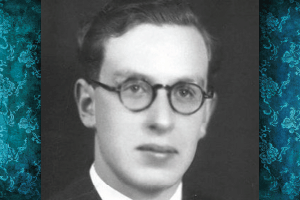
Those days are thankfully a thing of long-past history. But a public although now largely forgotten debate between Jew and non-Jew about Jews and Judaism — a modern-day heir to the disputations of old — took place just over 50 years ago. It too featured a “priest” of sorts a renowned academic figure facing off against an eloquent observant Jew in front of an audience of hundreds. Unlike its medieval antecedents however this “last of the great disputations” was called for by the Jew and held in friendly territory a college campus Hillel House rather than in a royal king’s court or church plaza. And according to many of those present that day it ended rather well for the Jewish disputant. The story begins in January 1961 when Professor Arnold Toynbee a British historian of great renown and author of Oxford University Press’s 12-volume work A Study of History arrived in Montreal to deliver a series of lectures at one of Canada’s leading academic institutions McGill University.Toynbee’s reputation for controversy preceded him. As early as 1934 Toynbee had called the Jewish People a “fossilized” civilization and “extinct society ” and in his books he had compared Israel’s treatment of the Arabs to what the Nazis had done to Europe’s Jews. One of his talks took place at the center of McGill’s Jewish life Hillel House. There before an audience of Jewish students Toynbee reiterated his slanders against Jews and happily confirmed that his opinions had not changed.
To read the rest of this story please buy this issue of Mishpacha or sign up for a weekly subscription