“Prohibition" created a difficult situation for American Jewry, who relied on wine for ritual practices such as Kiddush, Havdalah, bris milah, and weddings
Homemade wine remained legal, and this led to a rise in production of “bathtub” wine. Various exotic flavors developed in the bathtubs of Lower East Side tenement buildings, with more successful entrepreneurs sharing recipes and samples with their neighbors.
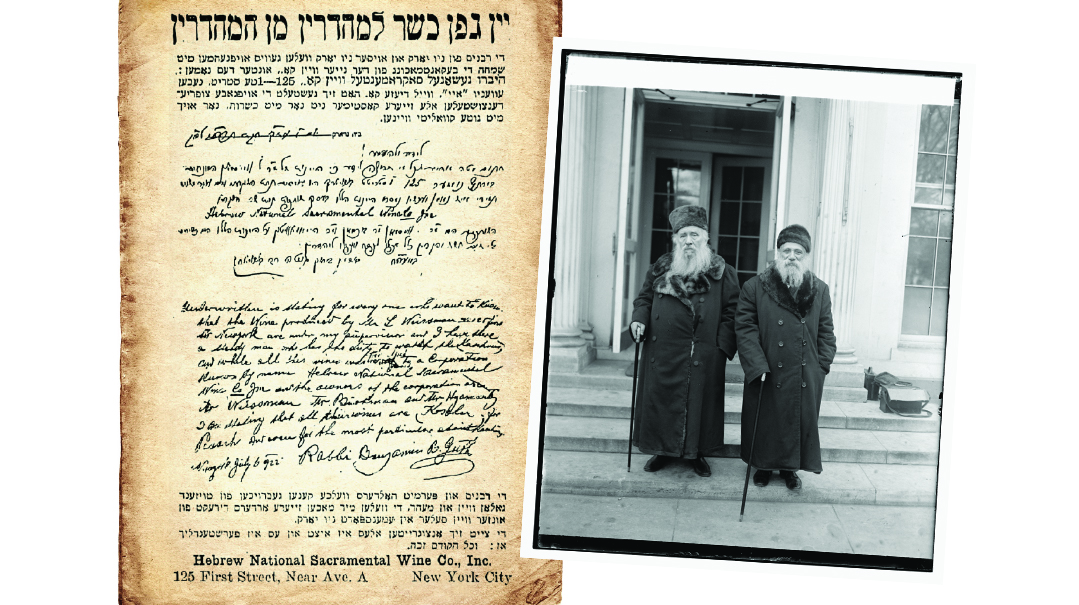
Intense lobbying by religious groups led to an exemption for sacramental wine. A complex system was created under which rabbis were the only ones permitted to traffic in wine. To complicate matters further, rabbis were to “distribute” the wine in exchange for donations to their shuls and institutions. Ostensibly this was designed to prevent personal profiteering.
This system had major flaws, and it wasn’t long before criminals began masquerading as rabbis, and, sadly, some “rabbis” became involved in the corruption as well. Never before had semichah certificates been in such high demand; the rabbinate had swiftly morphed into a path to prosperity. It wasn’t long until these “rabbis” ventured into other services, performing weddings, issuing gittin, and certifying butchers.
The Volstead Act ultimately proved unenforceable and spurred an explosive growth in organized crime and corruption across the country. On December 5, 1933, the 21st Amendment to the US Constitution was ratified, repealing Prohibition laws and returning control of alcohol to the states.
Create a free account to keep reading.