Setting a beautiful table can be a spiritual act and a concrete way to welcome Shabbos.
“And let them make Me a sanctuary that I may dwell among them” (Shemos 25:8). Hashem commands us to build His temple. Dictated by Hashem and brought into existence by Betzalel, the design of the Mishkan itself, as well as the items inside, is explicitly spelled out in the Torah because the details mattered. Materiality, physicality, and design matter.
Let us look, therefore, at the holiest day of the week, the time when we rest from creative work, and examine the centrality of design to that day, particularly the table. We are prohibited from sewing, dyeing, constructing, or embroidering on Shabbos because we did all of those things to construct our Mishkan. Shabbos symbolizes a rest that includes not only a physical relaxation but also a rest from creativity and design.
Nevertheless, it is on Shabbos that we are able to unwind and enjoy our creativity, whether through the cooking and baking we did earlier in the day, the arrangement of the table, or the use of the money we made from our occupations to buy the food that we serve.
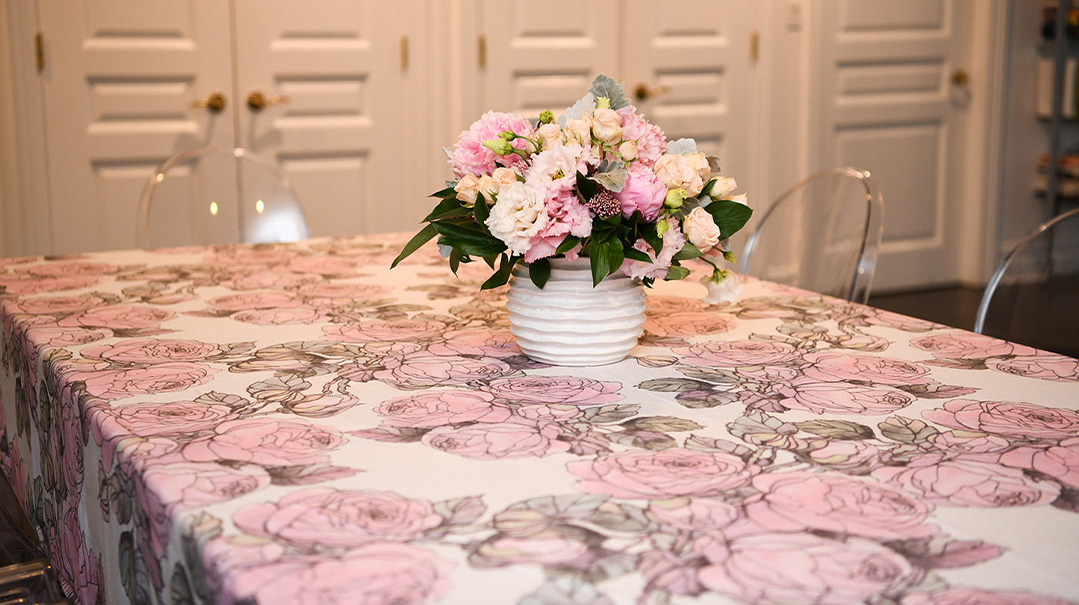
Setting a beautiful table can be a spiritual act and a concrete way to welcome Shabbos. The tablecloth we lay down, for example, isn’t a specifically Jewish item. And yet when we use that tablecloth to beautify our Shabbos table, we elevate both our Shabbos and the tablecloth. For the Mishkan we used gold, silver, and copper; blue, purple, and crimson yarns, fine linen, goats’ hair; tanned ram skins and acacia woods. For our tablecloths we may use linen, cotton, vinyl, oilcloth, or polyester. We may incorporate larger trends or stay with a classic look. We may dress our table for the season, using velvet in the winter and linen in the summer, or use the same faux alligator-skin tablecloth all year round.
Create a free account to keep reading.