Under discussion was a incident involving matzah in the mails, and the US Postal Service’s deliberate destruction of this delivery
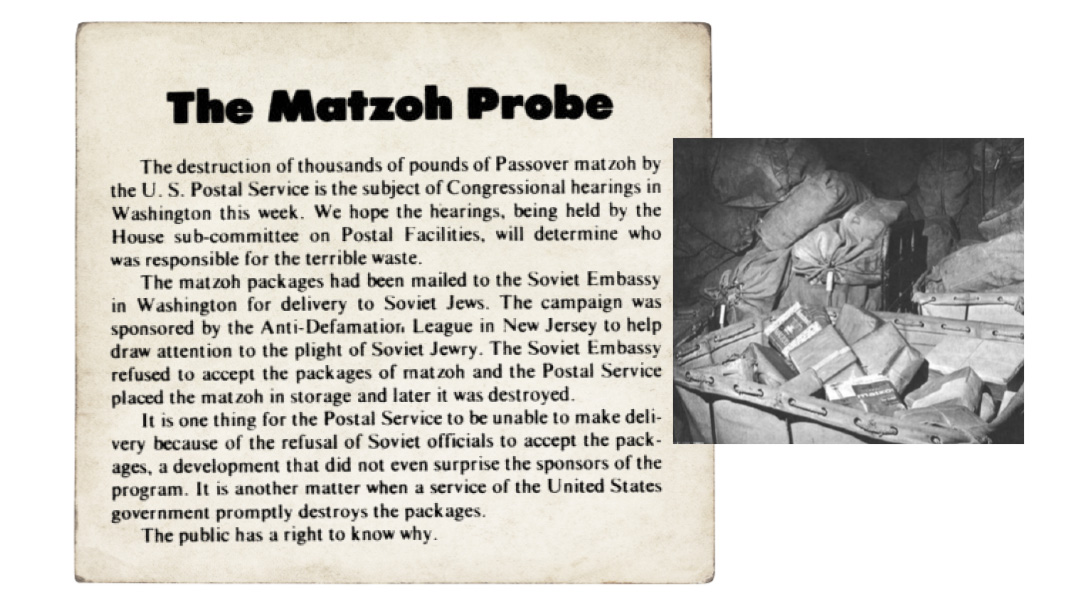
Today, we will take testimony on an incident involving the mailing of unleavened bread during the Passover season to the Russian Embassy for Jews in the Soviet Union, who are not allowed to produce their own matzah for the holy season. These mailings were the result of a campaign by interested American citizens to dramatize the plight of Jews behind the Iron Curtain. The Embassy refused to accept these mailings.… Matzah has a religious and historical significance to the Jewish people. Its destruction, during the Passover season, has created a serious and vital question as to whether or not the Postal Service should have disposed of this food to organizations ready to supply it to the needy in the face of requests from such organizations.
—Hon. Robert Nix (D-PA), chairman of the House Subcommittee on Postal Facilities and Mail
At 10:30 a.m. on April 12, 1972, the House Subcommittee on Postal Facilities and Mail convened in the Cannon House Office Building in Washington, D.C., for one of the most peculiar hearings in congressional history. Under discussion was a incident involving matzah in the mails, and the US Postal Service’s deliberate destruction of this delivery.
With utter seriousness, congressmen gathered to hear testimony regarding the impetus for the matzah mailing, the plight of Soviet Jewry, the callousness of the Soviet government, and the controversial decision ultimately implemented by the Postal Service to incinerate several tons of matzah.
Create a free account to keep reading.