Baruch Hashem, when I listened to this, I knew immediately we had captured the evening in its entirety, so when you listen, you feel you were there
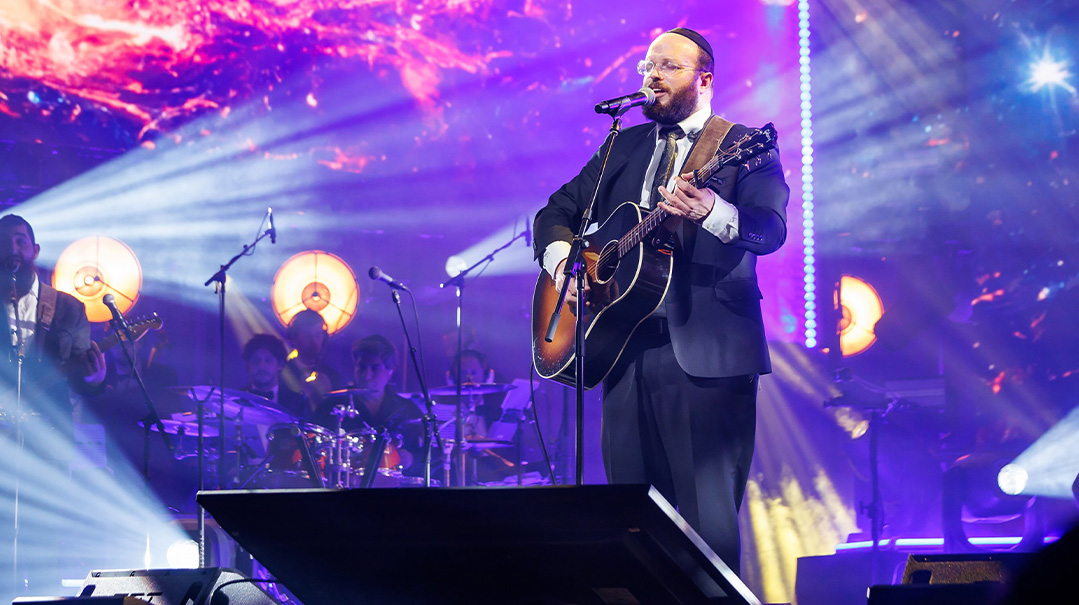
“The biggest fear when putting out a live album is that it won’t capture the beauty and energy of the live event and won’t hit as powerfully,” Eitan reflects. “But baruch Hashem, when I listened to this, I knew immediately we had captured the evening in its entirety, so when you listen, you feel you were there.
“When you’re doing a live event, you know that so much is up to Hashem,” Eitan continues. “I think this is the first time ever that I played out an entire concert program as planned, to the last note. As you’ll hear, Live in Jerusalem III is less of a concert than a simchah. We sang songs that everybody knows and loves, because part of the geshmak of the album is everyone’s involvement.”
When he says “songs that everybody knows,” he doesn’t only mean his own “Lemaancha” and “Ki Karov,” but also vintage Yom Tov songs like “Vesamachta,” “Hoshia es Amecha,” the timeless “Baal Shem Tov Niggun,” and even “Utzu Eitzah” — not typical concert picks. The mix of these classics with newer, high-energy songs is an uplifting combination, with a very eclectic, “real life” feel. The crowd was up and dancing, and you can feel that energy on the recording as well.
It’s common for live recordings to have overdubs and extra music tracks added in the studio afterward, but this wasn’t necessary on Live in Jerusalem III, because the microphones were placed so effectively within the crowd.
Create a free account to keep reading.