“There will be a time… we’ll have back our prayer, and we’ll have back our song.”
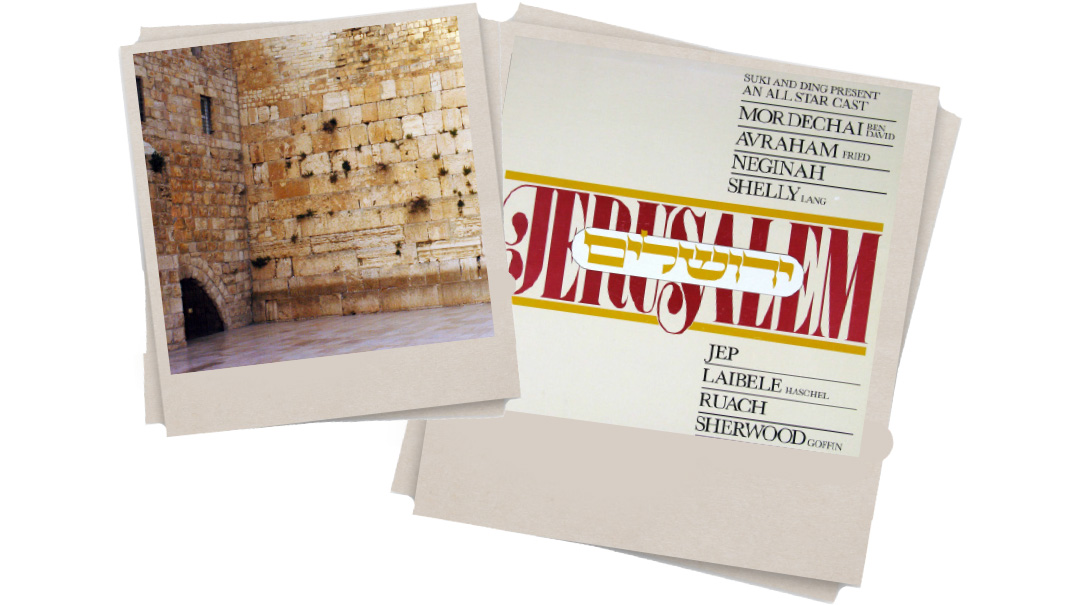
Although not all the songs we chose were sad and filled with longing (“Samachti” and “Shabechi” are songs of joyous praise), there was definitely a Tishah B’Av touch.
For the album’s English song, we chose “There Will Be a Time” (“Eichah”), composed by Chumi Berry, with lyrics written by her sister Mirel Simcha. No one could pull off that song with more heart, emotion and feeling than MBD, singing of how, in the aftermath of the Churban, it looks like everything is over — and there was nothing to bring that home like MBD chanting the first and last pesukim of Eichah as the intro and interludes in order to bring out that horrible feeling of destruction.
Yet there is long-range hope, as “there will be a time… we’ll have back our prayer, and we’ll have back our song.”
Why does the tune to Eichah arouse so much emotion? Most people are familiar with the two common modes of the musical scale: major and minor. Songs composed in major generally bring a sense of joy, while the minor scale is often associated with longing and sadness. It’s fair to say that most Jewish songs we know — from the traditional to the modern — are in the minor mode (with some exceptions, such as chassidish marches and many children’s songs). What I find amazing about the way we sing Eichah is the constant back and forth between the major and the minor scales. Perhaps there’s a powerful message here: While songs of galus will naturally be in the somber mode of “minor,” there remains the optimism of a bright future, reflected by the “major.” How fitting that when it comes to our “Anthem of Galus” — the niggun for Eichah — the major and minor are enmeshed.
Create a free account to keep reading.