On the side, he’s a music guru with broad knowledge and passion, especially for the songs of the past
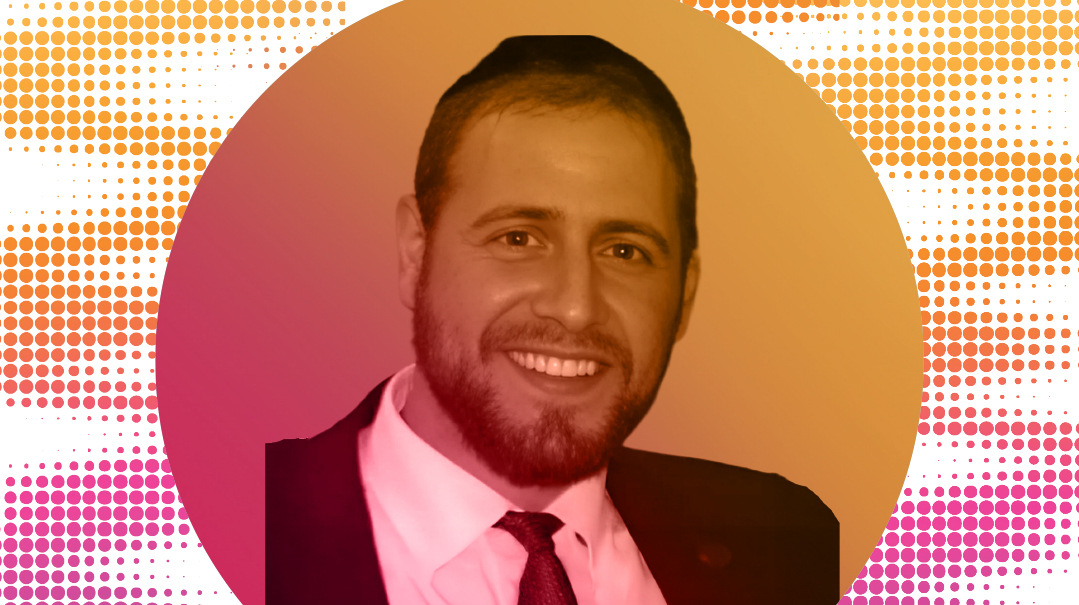
He’s a rosh chaburah at the Waterbury Mesivta, but that’s just one of his hats. RABBI EZI WARTELSKY delivers shiurim on various platforms, and is also the founder of Yahrtzeit Yomi, where, on each day of the calendar, he offers knowledge and insight about prominent Jews who passed away on that date in history. On the side, he’s a music guru with broad knowledge and passion, especially for the songs of the past.
My taste runs the full gamut from Ben Zion Shenker and the London School of Jewish Song, to Amudai Shaish and Avraham Fried and Benny Friedman and beyond. But the child part of me — which I feel is like quite a big part — in enamored with the work of Shmuel Kunda a”h. I can quote whole sections of Shmuel Kunda’s albums to you, but next week, when my mood changes, I’ll be back in Benny Friedman land.
These days, it would be Ben Zion Shenker’s “Lo Saivoshi.” But I go seasonal. Before Purim, I like to use the Gerrer “Shoshanas Yaakov,” or before Succos, MBD’s “Vesamachta.”
I often sing “Kol Mekadeish” to the vintage “Mimkomcha” tune (composed by Bobover chassid Ezriel Eliezer Mandelbaum Hy’d, which MBD sang on his father’s second Melitzer Oneg Shabbos album), unless I’m eating in yeshivah, where they don’t sing it. When my siblings and I are together for Shabbos, we sing Yossi Green’s “Kah Ribon” from MBD’s Moshiach album.
I often daven from the amud on Shabbos morning, and sometimes for Hallel as well. I sing Hallel in tunes related to the month we’re in, and I love hearing seasoned chazzanim so I can borrow their ideas. I once spent Simchas Torah in Jerusalem’s Rechavia neighborhood, and Rivie Schwebel was there, too. He sang “Aderaba” for “Odcha,” and I’ve used that ever since. One Shabbos Chanukah I had the idea in the middle of davening to use Ben Zion Shenker’s “Menuchah Vesimchah” for “Odcha/Ana Hashem,” and that went over really well.
“Meheirah yishoma be’arei Yehudah / They are going to serve us a very fancy seudah…,” from the wedding song in Boruch Makes a Simcha. In my opinion, Shmuel Kunda was the greatest lyricist in the last 50 years. Reb Shmuel could be silly, but he could also be serious and meaningful and emotional and powerful.
When it comes to Yiddish lyrics, I would say Lipa is the king of talent. Listen to his song “Moshe Rabbeinu” on Mona 4 for a prime example.
That would definitely be Amudai Shaish II. No actually, I’d take JEP 4. Or wait, Avraham Fried’s Chazak. Then again, maybe Pray and Sing. But I’m a Lipa guy, I need Lipa. I’d have to have Lipa Baderech, or maybe Me’umka DeLipa, which is a very underrated jewel.
If I could only take one album, I’d be stuck. For me, the variety is very important. Each type of music means something else to me and connects to a different part of my neshamah.
Try Binyomin Miller’s “Types of Yidden” from Camp Lemala. And it’s hysterical, too. What a talent! And, going back many decades, there is Rabbi Dr. Twersky’s world-renowned “Hoshia Es Amecha.”
Yigal Calek had a special gift for bringing out the messages of the Neviim. I’ve always wondered how he saw the songs in the words of “Sali umetzudasi,” or “Shimu melachim.” Someone pointed out to me that it is hard to transpose Yigal’s melodies onto other words, such as for Lecha Dodi or any other piece of davening, because he really wrote them to express the specific words he chose. They can’t just float anywhere.
Try Binyomin Miller’s “Types of Yidden” from Camp Lemala. And it’s hysterical, too. What a talent! And, going back many decades, there is Rabbi Dr. Twersky’s world-renowned “Hoshia Es Amecha.”
“Gam Ki Eilech,” from the 2015 Waterbury album. I listened to it endlessly. Another big one for me nowadays is Benny Friedman’s “Charosho.” And Elie Schwab, an old camp friend, composed an amazing song called “Simchas Beis Hashoeiva,” which was performed by Lipa together with Lev Tahor. It’s gotta be one of my favorite niggunim from the last 20 years.
MBD’s 1996 Once Upon a Niggun. It brings listeners back into the old niggunim. The album also had some of the best arrangements I’d ever heard, thanks to the musical genius of Rabbi Suki Berry.
Reb Shlome Der Geller’s niggun. That’s the first track on Avraham Fried’s Avinu Malkeinu album, a real beauty. And Reb Ben Zion Shenker’s tune for “Hodu” from Hallel. You know, just like they have Carlebach Friday night minyanim, I think someone should start Shenker Hallel minyanim.
I try to present any music that’s relevant to the featured tzaddik on his yahrtzeit, such as the Modzhitz and Bobover Rebbes, Rav Boruch Ber, and of course Rav Meir Shapiro. Sometimes, the day itself is occasion for a specific song. For example, the pasuk tells us that Zechariah HaNavi received his final nevuah, that of “Od yeshvu zekeinim uzekeinos…” on 4 Kislev, so when I discussed the significance of the day and the meaning of the prophecy, I included the song.
MBD’s “Vesamachta Bechagecha” takes me back to Camp Munk in the late 1980s. At that time, when I was a kid in camp, “Vesamachta” was Rabbi Josh Silbermintz’s favorite niggun. He sang it every Shabbos, and a grammen was even put to that tune for him. Also, the classic “Ashreinu” from the 1960s Pirchei Eilecha album was the mantra of Rabbi Dovid Trenk, with the chorus of “Torah in Adelphiaaaaah!” I can’t sing that song without singing that chorus…
My zeide was an incredible baal menagen with a beautiful voice. He loved to sing Zohar’s “Borchi Nafshi.” He also had a niggun that he’d sing three times for Mizmor L’Dovid at Shalosh Seudos every single week — it’s a well-known niggun, and although I don’t remember him singing it, I heard from Rav Dovid Willig, who knew my grandfather well, that he did. It was Reb Dovid who taught us the niggun. That niggun actually found its way to Chabad circles, where it’s commonly sung today.
(Originally featured in Mishpacha, Issue 1054)