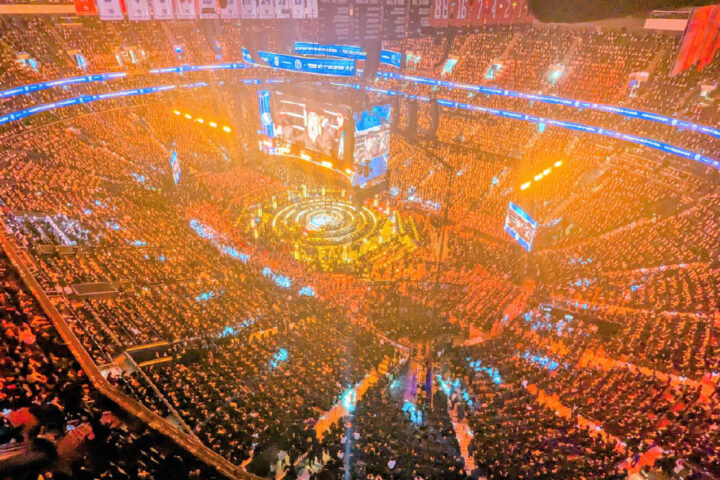
I was struck by the warmth, joy, and calm of their Shabbat table
Paul Greenberg, as told to Shlomo Horwitz
Imoved to Los Angeles in 1991, not knowing a soul, determined to make it big in Hollywood. The only people I met were through work or at parties. I quickly learned that relationships often felt shallow and transactional; unless you could help someone advance their career, they weren’t interested. Everyone seemed to be racing against the clock, desperate to “make it” in a limited window of time, and I struggled with the transient, often ruthless nature of the culture.
About a year in, I was working as a location assistant on a Kellogg’s Corn Flakes commercial. The production company needed me to approach the Orthodox Jewish residents of Hancock Park to get their approval to film on their street that Shabbos. Armed with a Star of David necklace and an envelope containing $10,000 in cash for bribes, I went door-to-door asking for signatures. One woman said her husband would want to hear more about the project before agreeing to let us film, and she invited me to come back later. When I did, her husband, Aaron Dov, agreed to sign — but only on condition that I join them for Shabbat lunch the following week. It was an unusual request, but I accepted.
That meal changed everything. I was struck by the warmth, joy, and calm of their Shabbat table. Their children were polite and well-adjusted, and the atmosphere was unlike anything I’d experienced in L.A. Over time, I started attending more meals, classes, and events in the Hancock Park community, and slowly, I began reconnecting with my Jewish roots.
About a year and a half later, having just finished directing a film, I was on a high in my career and feeling a spiritual awakening. I attended a retreat in Connecticut designed to let participants ask all their questions about Judaism, and at the retreat, I decided to begin keeping Shabbat and putting on tefillin daily.
Create a free account to keep reading.