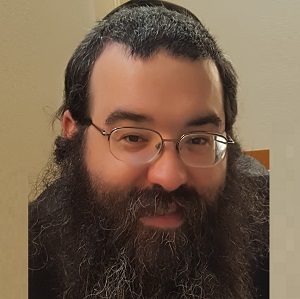
“Don’t worry,” the tax lawyer with a young family told his mother. “I will be Yankel’s voice for justice”
Norman Rosenbaum was teaching law on that winter day in 1991 when Professor Moshe Tzvi Reicher came to his classroom with some bad news. “Sit down,” he told Rosenbaum. “Yankel was murdered in a riot.”
It was Aug. 19, and Australia was half a world away from the sweltering streets of Crown Heights, where Norman’s brother, Yankel, 29, had come to perform research for his doctorate. Norman’s reaction was one of disbelief. By the time calls from the media started streaming in, however, he had no doubt the news was accurate. He also had no doubt that his life would change irrevocably.
“It was a horrific contemplation,” Mr. Rosenbaum told me in an interview four years ago, recalling the moment that he learned his brother had been murdered in what would become known as a modern-day pogrom. When the shivah ended, Norman made a promise to his mother, a vow that remained with him for the rest of his life: “Don’t worry,” the tax lawyer with a young family told his mother. “I will be Yankel’s voice for justice.”
In the intervening years, Norman made 250 visits to the United States and sat in countless meetings seeking justice for his brother, Yankel, who was stabbed to death in what became known as the Crown Heights Riots. This past Shabbos, nearly 29 years later, Norman, 63, died in Australia, his mission accomplished. What began as a personal crusade to have his brother’s killer, Lemrick Nelson, punished for his crime, ended in success. Norman’s life came full circle four years ago, when he returned to New York for a meeting with the family of the black child, Gavin Cato, whose accidental death triggered the rampage.
Create a free account to keep reading.