The British monarchy is famous for its majestic military ceremonies and splendidly outfitted guards. Mishpacha Jr. spoke to Lieutenant Colonel Simon Soskin, Brigade Major of the London Horse Guards, at their headquarters in Whitehall, a stone’s throw from Buckingham Palace
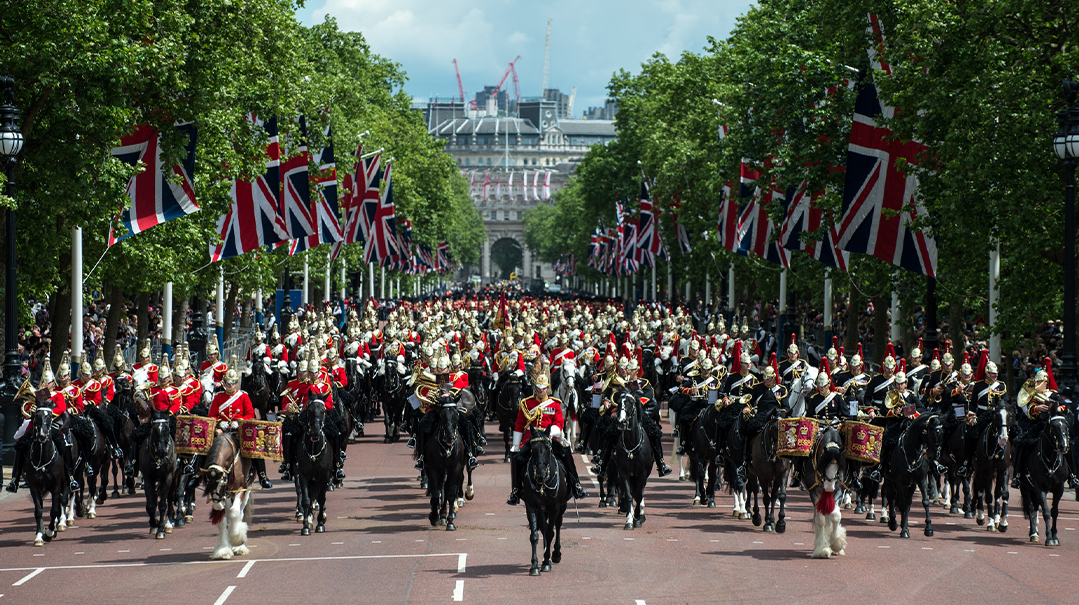
Nowadays, they’re mostly ceremonial, but there’s also a security aspect. One of the ways Britain has been honoring its monarch since the 1600s is by protecting them and glorifying their reign with the provision of guards 24/7. A guard is placed outside Buckingham Palace, St. James Palace, and Windsor Palace — the royal family’s three London residences — as well as at the Tower of London, to guard the crown jewels.
Having been through real wars, the guards are highly skilled and very conscious of the security aspect.
Indeed, and we often have to clarify this to citizens who think we’re maintaining this tradition purely for entertainment. A guard is an actual British soldier who serves in the army. Serving on royal guard duty is one of the perks, rather honors, given after around two years of army service. Many of the guards have fought in major operations overseas, such as the wars in Iraq and Afghanistan, and get a “break” doing ceremonial duties on their home turf.
Anyone between the ages of 16 and 25 can apply. They have to be fit and able-bodied and of decent intelligence proven with good GCSE grades (equivalent to American SATs) in high school. It used to be that applicants had to be of a minimum height, 5 foot 10 inches tall, but that no longer applies. Basic army training lasts one and a half years.
Create a free account to keep reading.