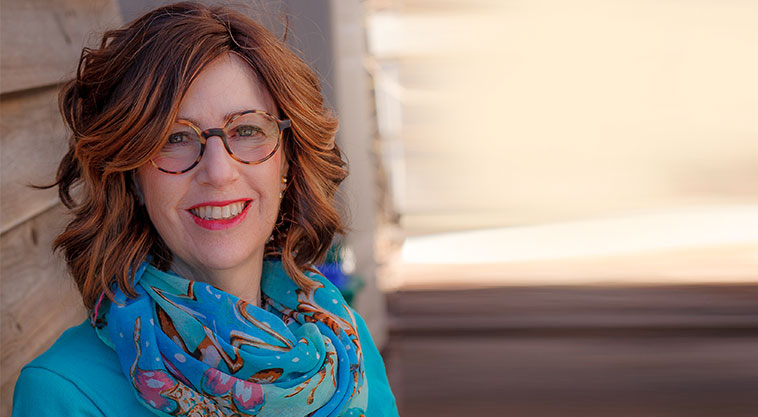
It has been said that bearing and raising children changes the tapestry of the soul. Kathy Laszlo can certainly testify to that fact. The birth of her firstborn son, Dani, set in motion a chain of life-altering events that brought Kathy from Hungary to Toronto and brought religious Judaism into her life. Along the way, Kathy became a trailblazing advocate for her child and other children who shared his challenges.

Budapest Hungary. Kathy was twenty-four when she and her husband Andrew welcomed their firstborn son Dani. Almost from the onset of Dani’s birth Kathy could see that all was not well with her baby. Dani didn’t achieve the typical milestones that mothers anticipate with such pleasure — crawling walking and enunciating their first word. Dani’s pediatrician assured them that this developmental delay was the result of poor eyesight and muscle tone. “He’s too good ” the doctor excused the lag “he rarely cries.” Kathy longed to believe the doctor but even though she was an inexperienced first-time mother she sensed that reality was very different.
While many mothers might speak of being determined to help their children not too many would go as far as Kathy did. In 1988 prior to the unexpected fall of the Berlin Wall (on November 9 1989) she and her husband hastily packed their bags and their child and escaped to Vienna never to return. There under the care of JIAS they took up residence as Jewish immigrants and were placed on the waiting list for emigration. A Viennese pediatrician diagnosed Dani’s problem and labeled it autism. This diagnosis Kathy says propelled them toward Canada a country that provides governmental health coverage. By the time the Laszlos arrived in Toronto Dani already had appointments scheduled with local pediatricians.
Though the government provided the Laszlos with health coverage those first few years were far from easy. In Hungary Kathy had been educated as an accountant; in Toronto lacking a working knowledge of English and Canadian certification she was forced to work as a cleaning lady for three years. In the evenings she took English classes. Her husband who was unemployed stayed home with Dani those first few months. When I ask her how she dealt with the grueling schedule and less-than-ideal employment she tells me simply “Everything I do I enjoy.”
At the insistence of doctors Kathy and Andrew were directed to find an appropriate school for Dani who at the age of two and a half was still neither walking nor talking. It was then Kathy believes that she saw clear signs of G-d’s intervention. One day Andrew entered an Orthodox Hebrew day school only to discover that the secretary was Hungarian. This secretary directed him to the Zareinu Educational Centre of Metropolitan Toronto a newly established Orthodox Jewish institution that provided personalized therapy and treatments to children with physical and developmental disabilities. Kathy now recognizes Zareinu and its plethora of professionals and volunteers as the impetus for her development and Dani’s as religious Jews. But at the time neither she nor her husband was optimistic about Dani’s acceptance into the school or about its very viability.
Create a free account to keep reading.